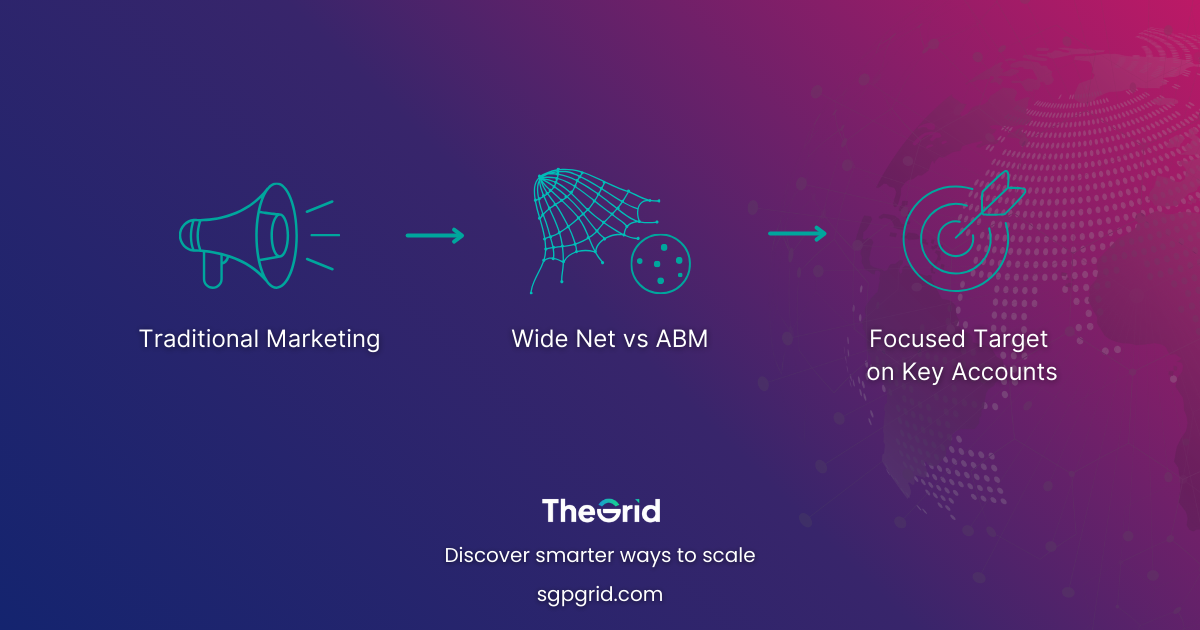
Most marketing strategies aim to reach as many prospects as possible. Account-Based Marketing (ABM) takes the opposite approach: it concentrates resources on a select group of high-value accounts that are most likely to convert.
For SMEs and startups in Singapore and Southeast Asia, ABM may sound like a strategy reserved for large enterprises with deep budgets. But with access to The Grid ABM intelligence, firmographic insights, and buying signals, ABM has become an accessible and powerful way for smaller businesses to maximize impact, focusing less on quantity and more on strategic quality.
What is ABM?
ABM is a B2B strategy in which sales and marketing align to identify a defined list of high-value target accounts and engage them with personalized, relevant campaigns. Instead of spreading efforts across hundreds of prospects, SMEs concentrate on the accounts that best match their Ideal Customer Profile and have long-term revenue potential.
This approach is especially effective in sectors with long decision cycles such as finance, logistics, and technology across Singapore and ANZ, where purchasing decisions involve multiple stakeholders.
Why ABM Works for SMEs
SMEs often operate with smaller teams and limited budgets. ABM ensures every marketing dollar is focused on the accounts that matter most.
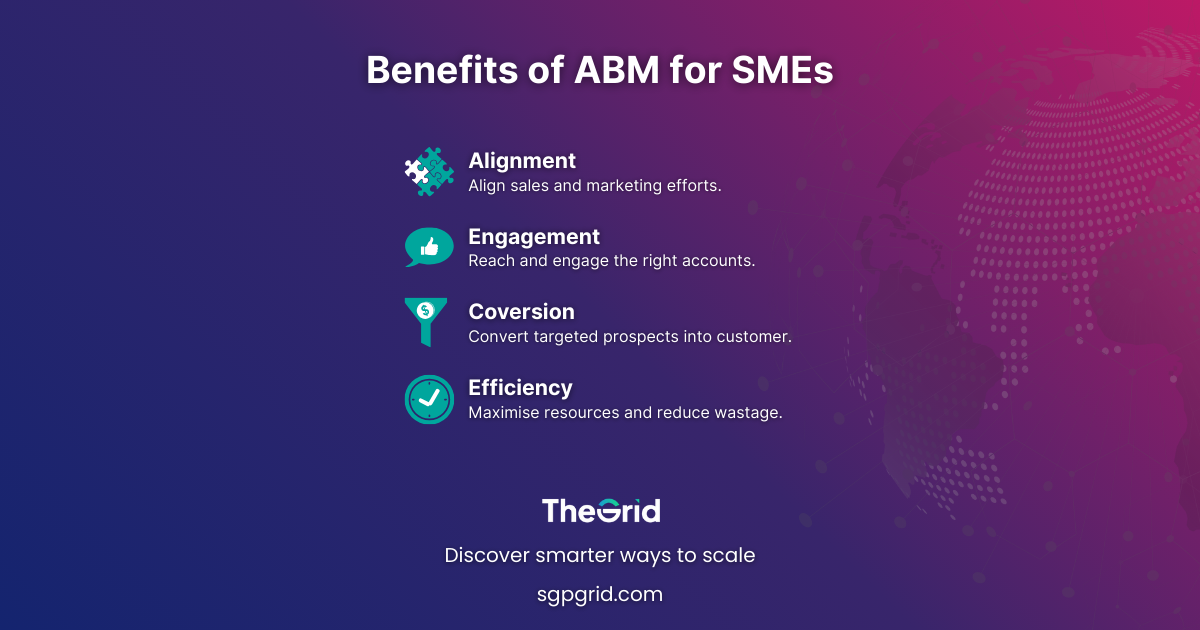
Key benefits include:
- Stronger sales to marketing alignment
- Deeper engagement with decision-makers
- Higher conversion rates
- More efficient use of resources
- For SME sales growth in SEA, ABM offers a clear path to winning key accounts without scaling costs.
How to Apply Data-Driven ABM Targeting for Key Accounts
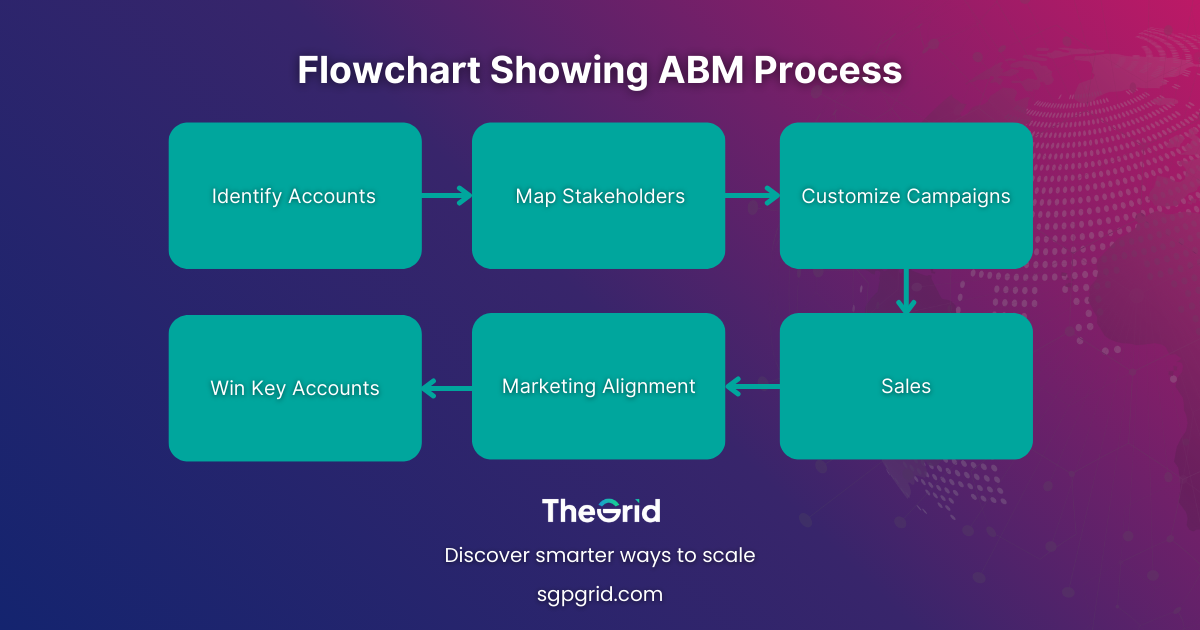
Use firmographics, technographics, growth signals, and industry context to determine which accounts should be prioritized.
Example:
A SaaS company targeting financial institutions may focus on banks that recently hired compliance officers or adopted new risk management tools.
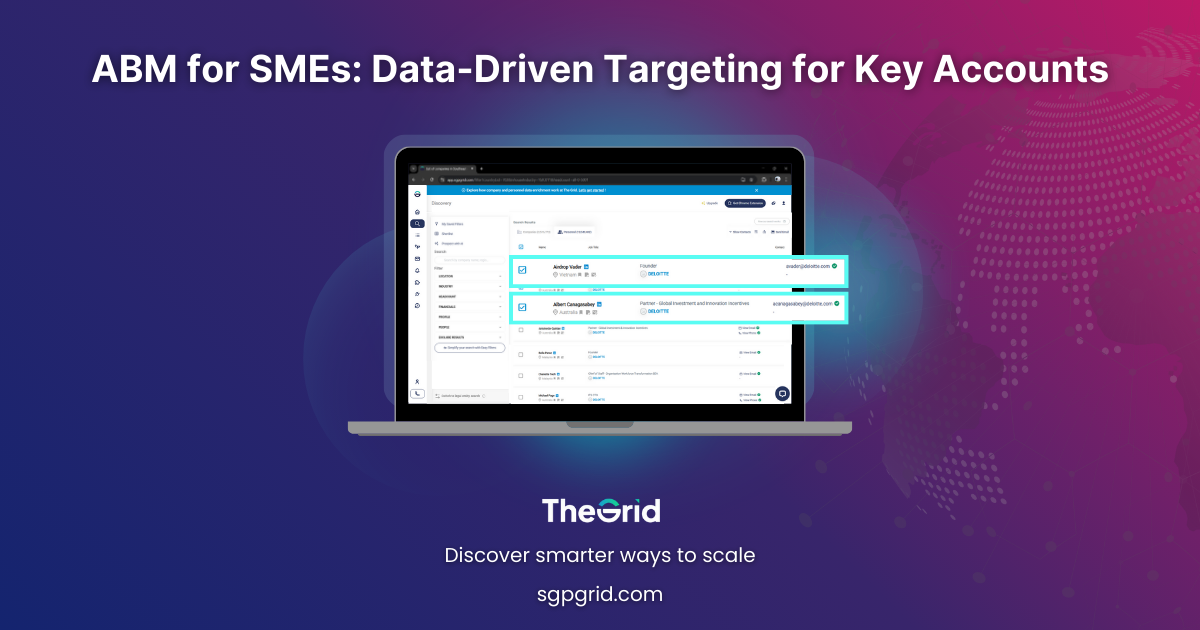
Data from The Grid ABM intelligence and verified business data Singapore makes this selection process precise and evidence-based.
Map Stakeholders
ABM requires understanding who influences and approves purchasing decisions.
Identify:
- influencers
- champions
- decision-makers
- budget owners
With decision-maker data SEA, sales teams can confidently reach the right people without guesswork.
Create Customized Campaigns
Personalization is central to ABM. Tailored campaigns may include:
- industry-specific case studies
- insights tied to regulatory changes
- content aligned to each account’s challenges
- personalized outreach from sales
These targeted touches build trust and relevance far faster than broad messaging.
Align Sales and Marketing Efforts
ABM succeeds only when both teams work as one.
Marketing provides targeted content and insights; sales delivers personalized outreach and builds relationships.
Together, they create a coordinated B2B key accounts strategy.
Real-World Example
A Singapore-based IT consultancy wanted to enter the financial sector. Instead of broad outreach, the company used an ABM strategy focused on ten mid-sized banks.
Using The Grid’s ABM intelligence, the team:
- analyzed each bank’s tech stack
- identified compliance pain points
- tailored case studies around regulatory requirements
- reached out to CIOs and compliance heads directly
Within a year, the consultancy secured three multi-year contracts, all from the ABM campaign, proving that strategic focus beats volume.
Conclusion
Account-Based Marketing empowers SMEs and startups to target fewer but more valuable accounts with precision. By leveraging data-driven targeting, businesses can identify ideal customers, understand decision-makers, and deliver campaigns that resonate deeply.
In Singapore and Southeast Asia, where competition is fierce and resources limited, ABM offers SMEs a scalable, impactful way to compete with larger players using intelligence, personalization, and focus.
Disclaimer
This article is for informational purposes only. Data and examples are based on publicly available information and insights from The Grid’s platform. Results may vary depending on business context.
References
- HubSpot: https://blog.hubspot.com/marketing/account-based-marketing
- Gartner ABM Insights: https://www.gartner.com/en/insights/abm
- LinkedIn B2B Institute: https://business.linkedin.com/marketing-solutions/b2b-institute