Artificial intelligence (AI) is no longer “enterprise only.” Today, AI lead generation tools in Singapore are accessible to SMEs and startups that want to move faster with smaller teams. Instead of manually sorting spreadsheets or relying on gut feel, businesses can use AI to identify high-potential accounts, prioritize follow-ups, and run outreach that stays relevant at scale. For growing teams across SEA, this shift is powering AI in B2B marketing, where targeting and timing matter as much as the message.
Predictive Lead Scoring: Prioritize the Right Lead
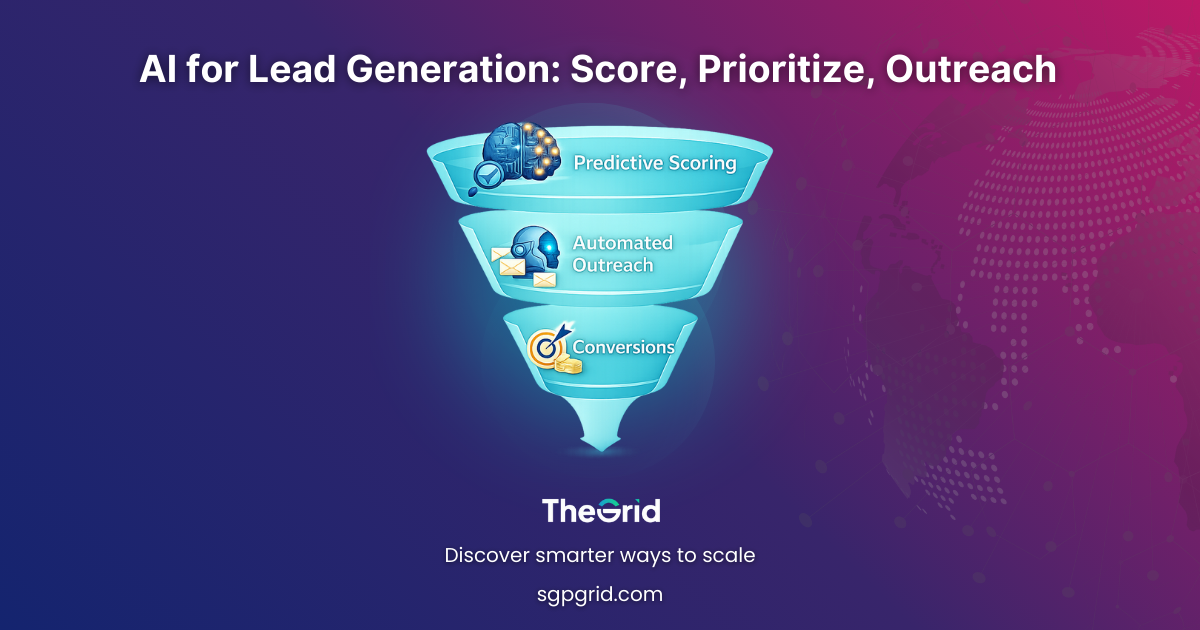
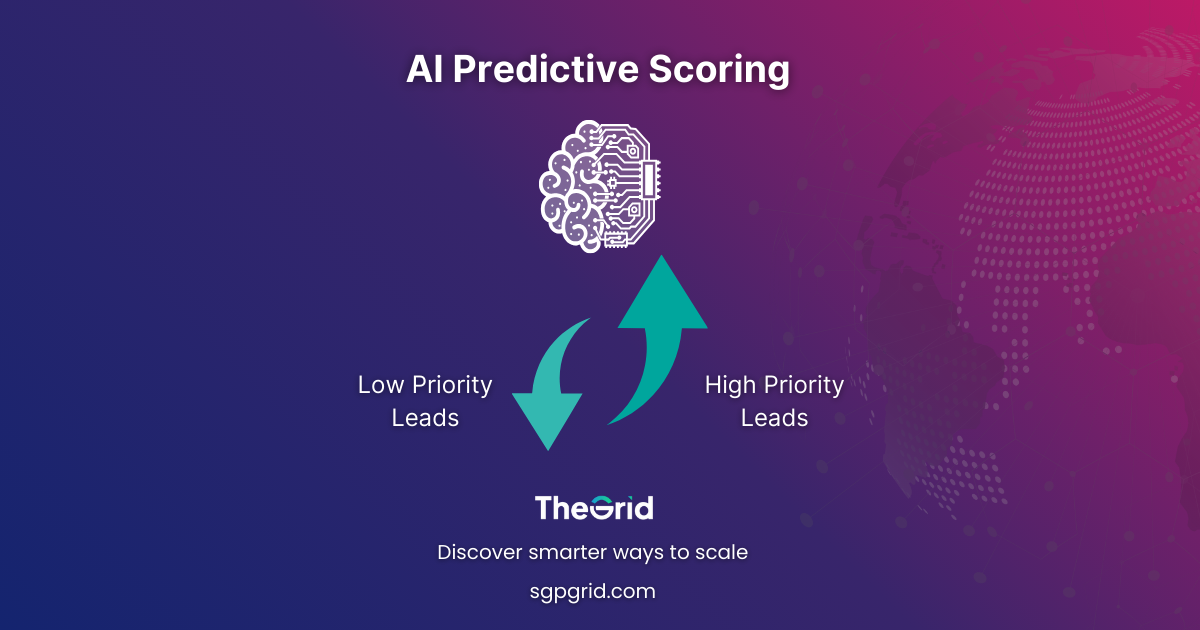
Traditional scoring often relies on basic rules: assign points for job titles, website visits, or company size. That approach works, but it can miss patterns that matter. With predictive lead scoring in SEA, AI evaluates multiple signals together, including firmographics, engagement, timing indicators, and historical conversion patterns, to estimate which prospects are most likely to convert.
In practice, machine learning lead generation helps SMEs answer questions like:
- Which accounts resemble past customers that closed fastest?
- Which leads show early ready-to-buy behavior?
- Who should our sales team contact first this week based on probability, not only activity?
This helps teams focus on pipeline quality instead of chasing every lead.
Automated Outreach: Personalized and Follow-Up at Scale
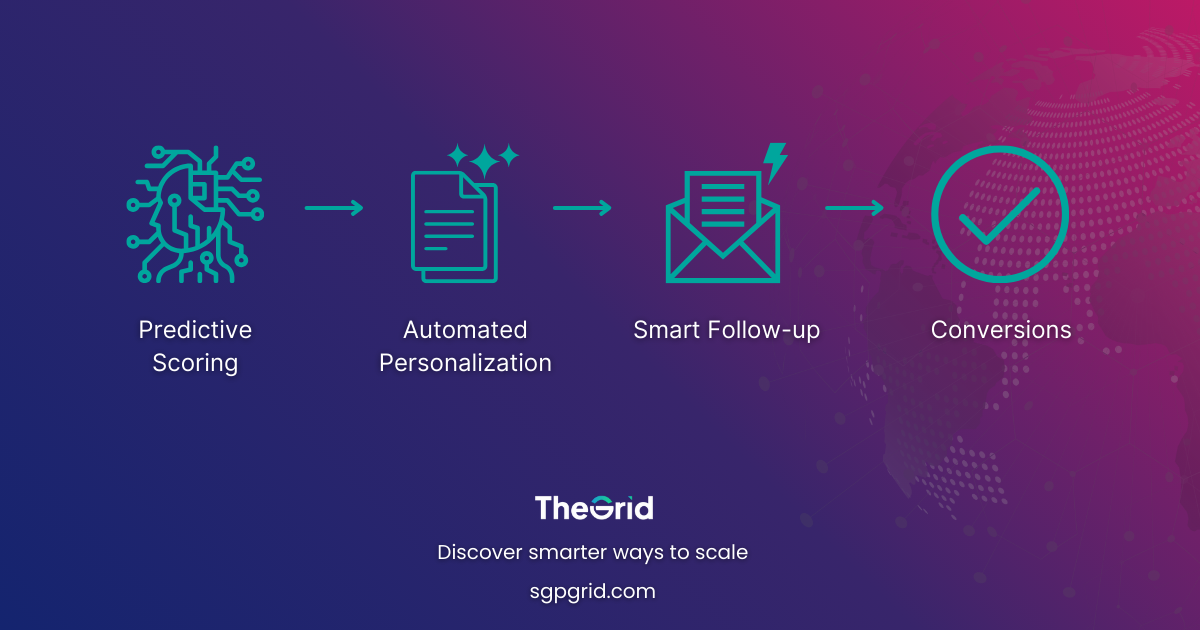
Once high-quality leads are identified, the next challenge is execution. Automated outreach in SME workflows reduce the time spent crafting, sending, and tracking follow-ups, while still keeping messages targeted. The best systems don’t just “blast emails.” They use data to support personalization at scale, such as:
- industry-specific angles
- role-based pain points
- timing triggers (like hiring, expansion, or active engagement)
Many AI sales tools in Singapore also suggest best sending times, improve subject lines, and recommend next steps based on reply patterns. For startups, this is a practical form of startup sales automation in SEA, keeping outreach consistent without adding headcount.
Key Benefits of AI in Lead Generation
When used well, AI gives SMEs a leverage typically associated with larger teams:
- Better prioritization through predictive scoring
- Higher response rates from more relevant outreach
- Shorter sales cycles by focusing on intent and timing
- Less manual research, more time for selling
- More consistent execution via automated sequences
A good example is The Grid, which uses AI tools to deliver faster sales intelligence, helping teams prioritize and execute more quickly.
Real-World Example
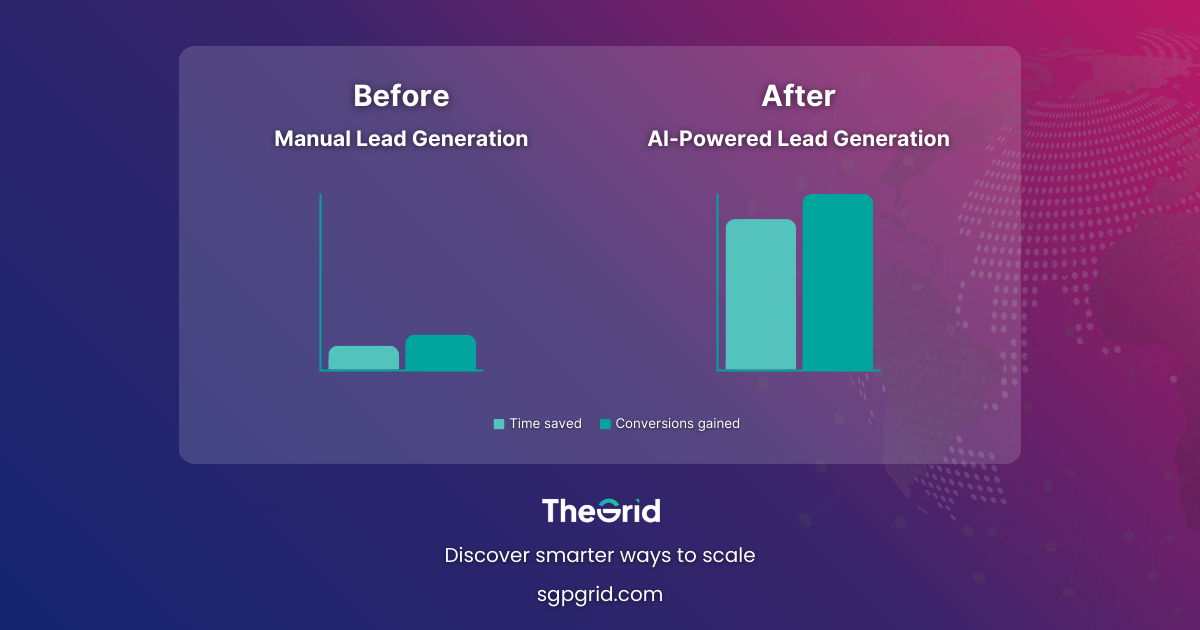
A Singapore-based SaaS business previously ranked leads manually and ran generic outreach campaigns. Many contacts were low-fit , and sales cycles dragged. After adopting AI-led scoring and automated outreach, the team reduced research time significantly, prioritized high-fit accounts first, and used segmented sequences by industry and role. The result shows more qualified meetings and fewer wasted follow-ups.
Risks and Considerations
AI improves speed, but SMEs still need guardrails:
- Avoid over-automation: if messages feel robotic, trust drops fast.
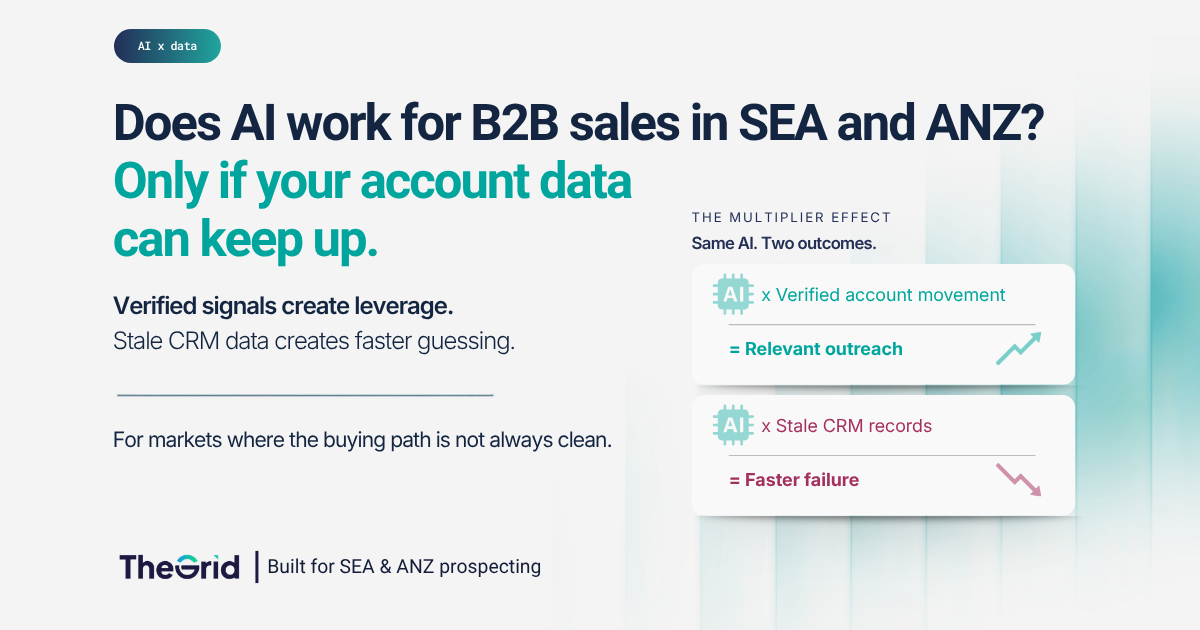
- Data quality matters: AI learns from inputs, that's why bad data creates bad scoring.
- Privacy and compliance: align AI-driven workflows with PDPA and GDPR principles, especially when handling personal data or cross-border outreach.
A good rule: automate the process, not the relationship.
Conclusion
AI is transforming lead generation from manual guesswork into a scalable, data-led system. With predictive lead scoring in SEA and automated outreach SME workflows, SMEs in Singapore and Southeast Asia can prioritize better leads, personalize faster, and convert more consistently without building a massive sales team.
For startups aiming to scale, AI lead generation in Singapore isn’t a future trend. It’s a practical advantage available now, especially when paired with strong data and a clear sales strategy.
Disclaimer
This article is for informational purposes only. Data and examples are based on publicly available information and insights from The Grid’s platform. Results may vary depending on the business context.
References
- HubSpot: https://blog.hubspot.com/sales/ai-lead-generation
- Gartner AI in Sales Insights: https://www.gartner.com/en/insights/ai-in-sales
- Personal Data Protection Commission (PDPC): https://www.pdpc.gov.sg