For many SMEs and startups in Singapore, Southeast Asia, and ANZ, sustainable sales growth starts with one foundational activity: B2B lead generation. It’s the process of identifying and engaging potential business buyers who are likely to benefit from what you offer.
Despite being a common term in sales and marketing, lead generation is far more than a buzzword. It is the backbone of predictable revenue, efficient prospecting, and scalable growth. Without it, companies risk wasting time on unqualified prospects, overspending on outreach, or losing out to competitors who use data-driven approaches.
This guide covers the fundamentals of B2B lead generation, why it matters for SMEs, and how you can build a reliable strategy tailored to the Singapore and SEA markets.
According to The Grid’s analysis of regional sales teams, companies with structured lead generation processes convert 2–3x faster than those relying on ad hoc outreach.
What is B2B Lead Generation?
B2B lead generation refers to the method of identifying and engaging decision-makers in other businesses who have a real need for your product or service.
Unlike B2C transactions, B2B buying cycles are longer and involve multiple stakeholders, often including procurement teams, finance leaders, and operational managers.
A “lead” is not just a contact. It is:
- a company or person who matches your Ideal Customer Profile, or
- someone who has shown interest in your offerings through their behavior or engagement.
Effective lead generation helps SMEs focus on companies with the highest likelihood of becoming customers.
Why Lead Generation Matters for SMEs
SMEs and startups often operate with limited budgets and smaller teams. A structured lead generation framework helps them:
1. Maximize limited resources
Targeting the right companies reduces wasted time and outreach fatigue.
2. Build predictable revenue pipelines
Good lead generation produces a steady flow of qualified prospects.
3. Scale into new markets more confidently
For SMEs expanding into Singapore, Malaysia, or Australia, data-driven prospecting is essential.
4. Stay compliant and trusted
In Singapore, businesses must follow the Personal Data Protection Act (PDPA) when collecting or storing lead information. Ethical data handling is now a baseline requirement in B2B sales.
SMEs using verified business data, such as firmographics, role-based contacts, and intent signals, tend to achieve significantly higher conversion accuracy.
The Lead Generation Process
Effective lead generation doesn’t happen by accident; it follows a structured process. By understanding each stage, SMEs can focus their efforts, qualify prospects faster, and build a more predictable sales pipeline.
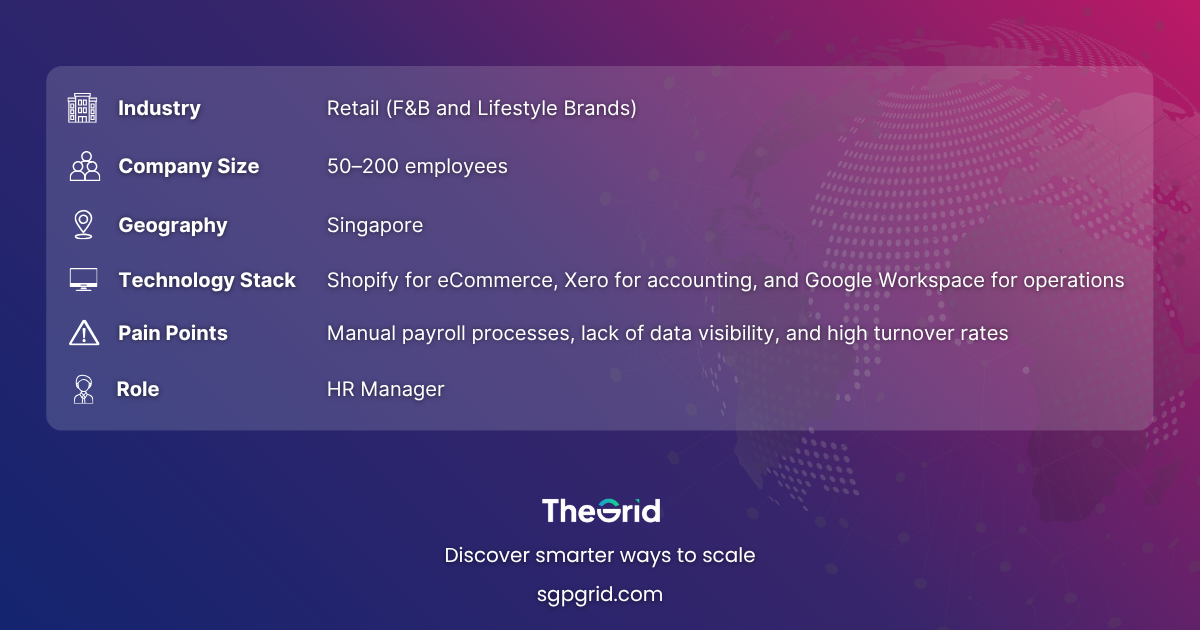
1. Defining Your Ideal Customer Profile (ICP)
Defining your Ideal Customer Profile (ICP) is the first step in any effective lead generation strategy. Your ICP describes the type of companies that are the best fit for your solution. Those who are most likely to convert, benefit from your product, and become long-term customers. A clear ICP keeps your outreach focused and ensures your sales and marketing efforts are directed toward high-value prospects.
You can define them by:
- Industry
- Company size
- Geography
- Buyer role
- Tech stack
- Pain points
Example:
A SaaS company offering HR software may define its ICP as:
“SMEs in Singapore with 50–200 employees, operating in F&B or retail, and still using spreadsheets for payroll.”
This clarity ensures outreach efforts target companies that are more likely to buy.
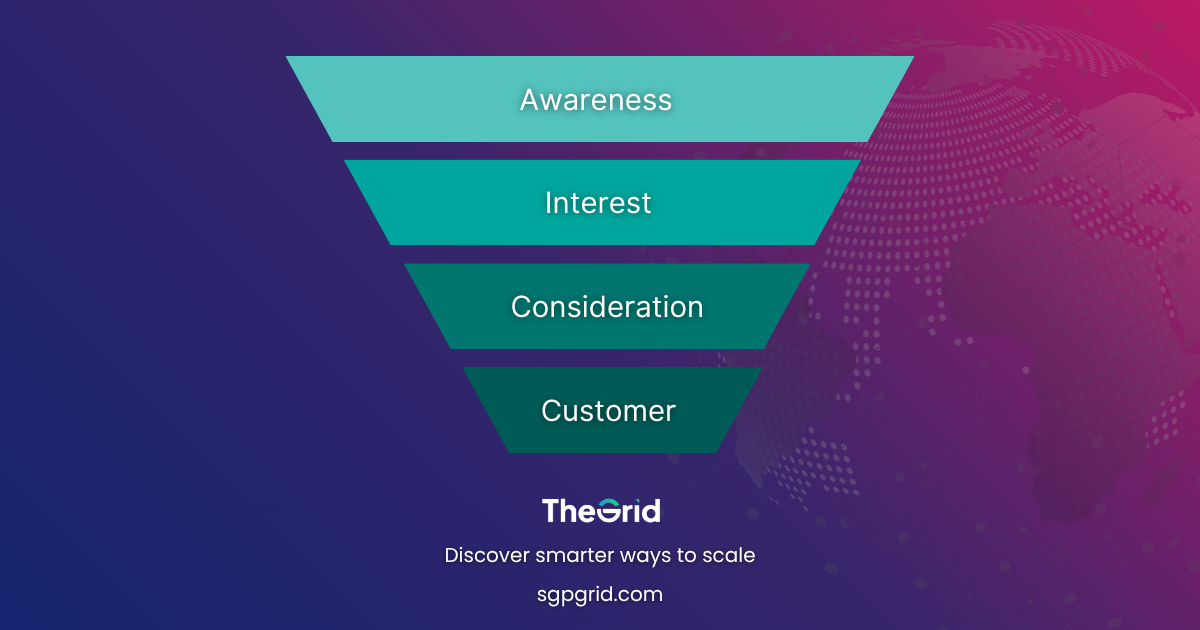
2. Building Awareness (Top of Funnel)
Building awareness is the first step in attracting potential customers into your sales funnel. At this stage, your goal is to make your brand visible to the right audiences and help them understand the problem you solve. The more consistently you show up where your prospects are searching or learning, the easier it becomes for them to recognize your expertise and engage with your content.
Here are some content channels you should be visible in:
- SEO content
- LinkedIn posts
- Webinars
- Industry directories
- Google search
This stage is all about visibility and education.
3. Capturing Interest
Once prospects are aware of your brand, the next step is to capture their interest. This happens when they take an action that shows curiosity or intent, often by engaging with your content or exploring your offerings more closely. At this stage, your goal is to encourage meaningful interactions that turn anonymous visitors into identifiable contacts.
Here are some content formats perfect for capturing interest.
- landing pages
- gated eBooks
- whitepapers
- webinars
- product demos
This is where forms and lead magnets help convert visitors into contacts.
4. Nurturing Leads
The next step is to nurture your leads, guiding them from initial curiosity to genuine purchase readiness. Most prospects won’t convert right away, so nurturing helps you stay top-of-mind, build trust, and deliver the right message at the right moment. This stage is essential for moving leads steadily through the sales funnel.
Nurture leads, by creating contents that include:
- email sequences
- content drip campaigns
- social engagement
- retargeting ads
This is where business intelligence platforms like The Grid add measurable value.
Using verified firmographics, industry filters (like SSIC codes), and decision-maker data, The Grid helps SMEs prioritize high-intent prospects and shorten sales cycles.
This makes nurturing faster, more efficient, and more personalized.
Inbound and Outbound Approaches
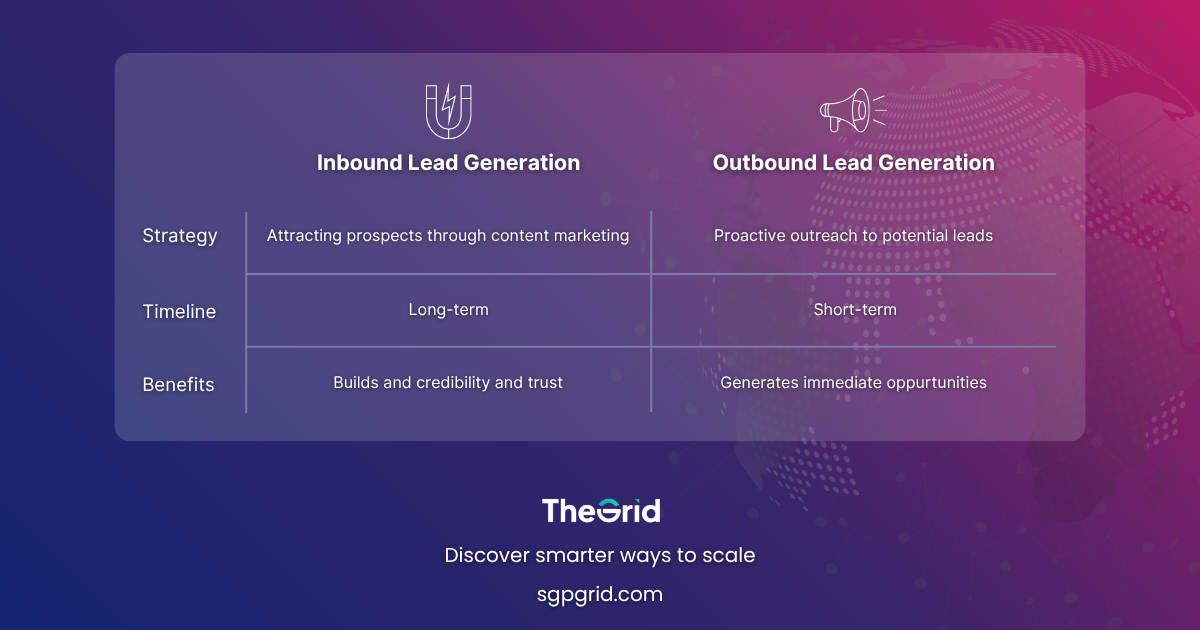
SMEs typically rely on two broad approaches when building their sales pipeline. The first is inbound lead generation, which focuses on attracting potential customers through valuable and educational content. This can include SEO-optimized blogs, LinkedIn posts, YouTube explainers, webinars, and case studies—materials designed to help prospects discover your brand organically.
Inbound efforts are powerful because they build trust and credibility over time. As more prospects engage with your content, your brand becomes a familiar and reliable resource. While inbound takes longer to ramp up, it offers compounding long-term results and often becomes more cost-effective as your content library grows.
The second approach is outbound lead generation, where SMEs proactively reach out to targeted companies through cold email, LinkedIn prospecting, cold calling, and targeted list building. Outbound is ideal for generating fast results, reaching specific decision-makers, and scaling quickly—especially when supported by accurate, verified data. Together, inbound and outbound form a balanced strategy that keeps the sales pipeline consistently active.
A Singapore SME Example
Consider a fintech startup in Singapore offering compliance software. On the inbound side, the company publishes educational articles explaining recent MAS regulatory updates, allowing prospects already researching compliance issues to discover their brand organically. At the same time, the sales team runs outbound campaigns targeting CFOs and compliance directors of mid-sized financial firms—identified through The Grid’s verified SEA database. This hybrid model ensures the startup maintains both visibility and precision, reaching leads who are actively searching for solutions as well as those who may not yet realize they need one.
Conclusion
B2B lead generation is ultimately about quality, not sheer volume. SMEs and startups that clearly define their Ideal Customer Profile, balance inbound and outbound approaches, and rely on verified decision-maker data can build predictable, scalable sales engines. For businesses in Singapore and across Southeast Asia, lead generation has become the foundation of sustainable growth rather than an optional effort. With localized SEA + ANZ coverage and high-accuracy data, The Grid empowers SMEs to identify high-potential prospects faster and engage them far more effectively.
Disclaimer
This article is for informational purposes only. Data and examples are based on publicly available information and insights from The Grid’s platform. Results may vary depending on the business context.
References
- Personal Data Protection Commission Singapore (PDPC): https://www.pdpc.gov.sg
- HubSpot: https://blog.hubspot.com/marketing/b2b-lead-generation
- Statista B2B Marketing Insights: https://www.statista.com/topics/2477/b2b-marketing