For SMEs and startups, one of the biggest challenges is identifying which customers deserve the most attention. Without clarity, teams end up chasing every possible lead, stretching resources thin and weakening overall performance. The solution is an Ideal Customer Profile (ICP), a clear definition of the type of company that benefits most from your product and is most likely to become a profitable, long-term client.
When backed by accurate data instead of assumptions, an ICP becomes the foundation of SME lead generation, sharper targeting, and more efficient SME sales strategy for SEA. In competitive markets such as Singapore and Southeast Asia—where compliance, efficiency, and trust matter—data-driven ICPs help businesses focus on the right opportunities and build stronger sales pipelines.
What is an Ideal Customer Profile?
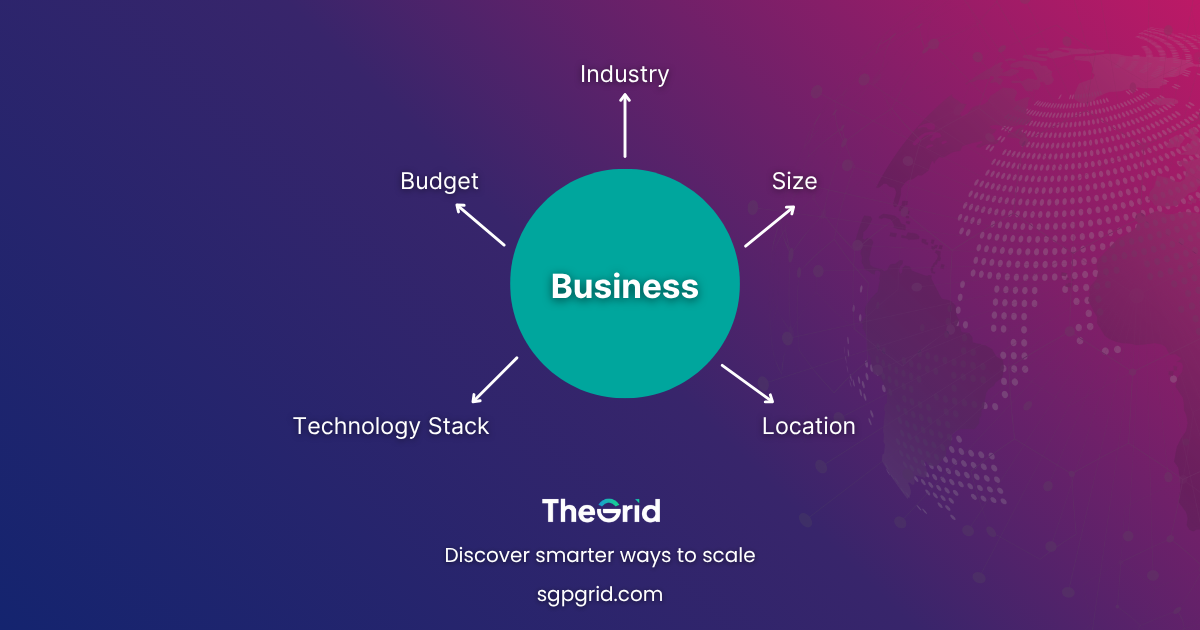
An Ideal Customer Profile outlines the characteristics of the companies most likely to succeed with your product or service. Unlike a buyer persona, which describes an individual decision-maker, the ICP focuses on the business itself, including its structure, needs, and readiness to buy.
A strong ICP helps answer questions such as:
- Which industries provide the best fit?
- What company sizes or revenue ranges convert best?
- Which markets or regions offer the strongest opportunities?
Aligning teams around a shared ICP eliminates scattered outreach and strengthens your ability to target customers Singapore and beyond.
Why Your ICP Must be Built with Data
Many SMEs rely on intuition when determining who their best customers are, but guesswork often leads to misaligned targeting and missed opportunities. A customer profiling with data approach, however, grounds your ICP in real evidence.
For example, a SaaS company in Singapore may discover through customer analytics that 70% of its highest-value clients are professional services firms with 50–200 employees. This insight helps the business refine its efforts rather than guess which industries to pursue.
Using sales intelligence tools like The Grid allows SMEs to validate assumptions with verified firmographics, technographics, and regional insights. Access to a verified business database Singapore and decision-maker data SEA enables teams to build ICPs that reflect actual market patterns and real buyer behavior across Singapore, Southeast Asia, and ANZ.
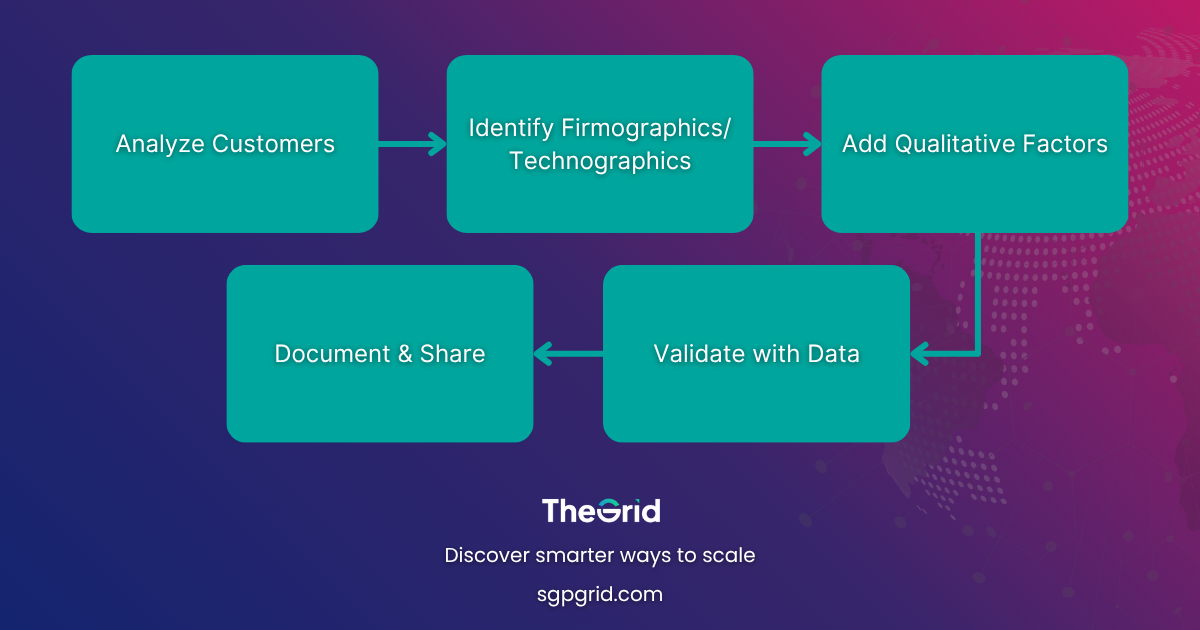
Steps to Build an ICP with Data
Step 1: Analyze Existing Customers
Start by understanding which clients generate repeat revenue, upgrade often, or remain loyal. Look for patterns in sector, headcount, geography, and technology use. These attributes guide the foundation of a realistic ICP.
Step 2: Identify Firmographics and Technographics
Firmographics include:
- industry (including SSIC code segmentation Singapore)
- company size
- revenue band
- region or market
Technographics help you understand what tools or systems your ideal customers already use—valuable for SaaS products or integration-driven solutions.
Step 3: Define Qualitative Factors
Beyond numbers, consider softer variables such as:
- company culture
- digital maturity
- openness to innovation
- regulatory conditions
For example, businesses operating under MAS guidelines may require compliance-driven tools, an important qualifier when building an ICP for B2B solutions.
Step 4: Validate with External Data
Cross-check your assumptions using external datasets. The Grid provides SEA + ANZ business intelligence, enabling SMEs to test whether their ICP maps to actual market segments. This validation ensures your ICP reflects reality—not internal guesswork.
Step 5: Document and Share Across Teams
An ICP only works when everyone uses it. Document the profile clearly and ensure that sales, marketing, and product teams use the same definition to qualify leads, build campaigns, and plan outreach.
Real-World Example
A Singapore-based HR tech startup initially targeted every SME in the market. After examining its data, the company discovered that the highest-value clients consistently came from retail and F&B companies with 100–300 employees. Supported by external insights from a trusted data source in Southeast Asia, the team refined its ICP.
With the new ICP:
- marketing campaigns became more relevant
- outbound outreach improved
- the startup attracted quality leads for SMEs
- the sales pipeline Singapore grew more predictably
This is the power of a data-driven ICP: targeted, efficient, and aligned with real market opportunities.
Conclusion
A strong Ideal Customer Profile helps SMEs and startups sharpen their focus and compete more effectively. When grounded in data—not assumptions—your ICP becomes the backbone of b2b lead generation SEA, smarter messaging, and high-quality lead targeting.
In Singapore and Southeast Asia, where efficiency and compliance are essential, data-driven ICPs help businesses see clearly where growth truly lies. With access to accurate firmographics, technographics, and regional insights from The Grid, SMEs can refine their targeting, reach the right customers faster, and unlock more effective startup lead generation.
Disclaimer
This article is for informational purposes only. Data and examples are based on publicly available information and insights from The Grid’s platform. Results may vary depending on business context.
References
- Personal Data Protection Commission Singapore (PDPC): https://www.pdpc.gov.sg
- HubSpot: https://blog.hubspot.com/sales/ideal-customer-profile
- Gartner Sales Data Insights: https://www.gartner.com/en/sales/topics/sales-data