Data has become the backbone of modern marketing, but so has data protection. For SMEs and startups across Singapore and Southeast Asia, marketing success depends not only on reaching the right audiences but doing so in a way that respects privacy laws and customer rights. As data privacy marketing in Singapore becomes more regulated, businesses must learn how to collect, manage, and use data responsibly.
Regulations like Singapore’s PDPA and Europe’s GDPR set strict standards for transparency, consent, and data handling. Non-compliance threatens more than penalties; it damages credibility. By following B2B marketing compliance principles and adopting ethical marketing Singapore practices, SMEs can build trust, improve engagement, and future-proof their marketing strategies.

Understanding PDPA and GDPR
PDPA Compliance SEA (Singapore)
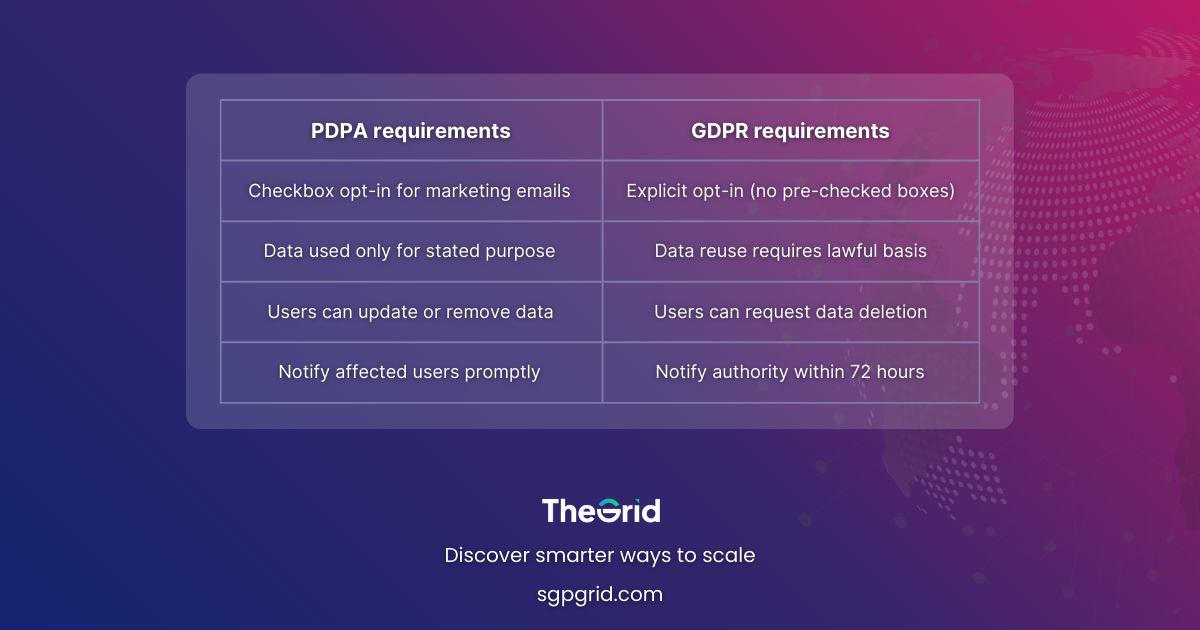
The Personal Data Protection Act (PDPA) governs how personal data is collected, used, and disclosed. For marketers, this means:
- obtaining clear and informed consent
- providing simple opt-out mechanisms
- maintaining secure data storage
- using personal information only for stated purposes
Effective marketing data protection SEA requires embedding PDPA principles into every customer interaction.
GDPR Marketing Rules (Europe)
While GDPR is an EU regulation, it applies to SEA businesses that handle EU customer data. GDPR demands:
- explicit, unambiguous consent
- transparency in data usage
- rights to delete, correct, or export personal data
- stricter rules for tracking, profiling, and cookies
Together, PDPA and GDPR form the foundation of global data-driven compliance SEA for SMEs.
Beyond PDPA and GDPR: What SMEs Should Know
Across Southeast Asia, similar laws are emerging—Philippines Data Privacy Act, Malaysia PDPA, Indonesia PDP Law, and Australia’s Privacy Act. As expectations sharpen across borders, SMEs must adopt startup data protection SEA approaches that work across multiple markets.
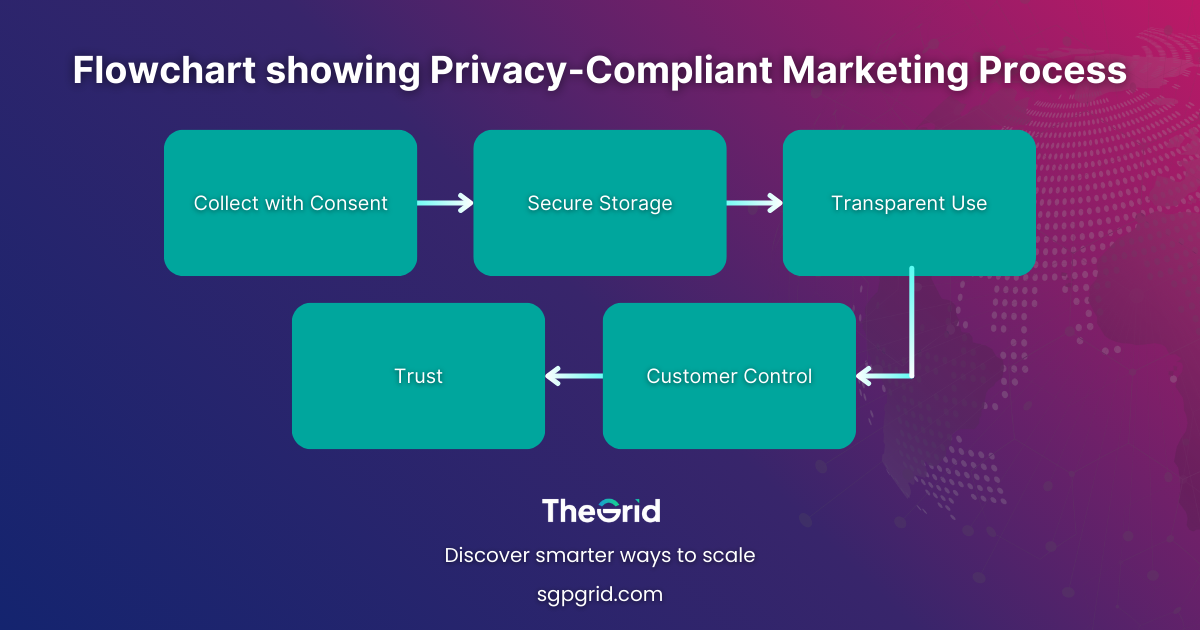
Instead of managing privacy reactively, SMEs benefit from implementing privacy-by-design—embedding compliance into forms, emails, lead capture, CRM systems, and automation tools from Day One.
Best Practices for Privacy-Compliant Marketing
Practice Transparency
Tell audiences what data you collect and why. Transparency improves trust and satisfies both PDPA and GDPR requirements.
Build Strong Consent Process
Use double opt-ins, clear sign-up language, and prominent unsubscribe links. Clean, permission-based lists are essential for SME marketing best practices.
Minimize Data Collection
Collect only information required to deliver value. For B2B, you often need only business email + job function—not unnecessary personal identifiers.
Strengthen Data Security
Store information in secure systems, limit internal access, and perform regular privacy audits. This protects your brand and reduces risk.
Use Verified, Compliant Data Sources
Solutions like The Grid data privacy offer structured, company-level intelligence that supports B2B marketing compliance while reducing reliance on unverified personal data.
Real-World Example
A fintech startup in Singapore previously relied on purchased email lists—resulting in low engagement and multiple PDPA complaints. After a full shift to PDPA compliance SEA, building opt-in lists and using The Grid data privacy instead of personal data scraping, the startup saw:
- higher open and reply rates
- cleaner CRM data
- stronger trust from prospects
- sustainable, long-term audience growth
Compliance became the catalyst for better results—not an obstacle.
Conclusion
Data privacy is no longer a technical requirement—it is a marketing imperative. By adopting frameworks like PDPA and GDPR, SMEs across Singapore and Southeast Asia can build compliant, trust-driven campaigns without sacrificing performance.
In an era where customers are more conscious about how their information is used, ethical marketing Singapore is a competitive advantage. With strong consent practices, secure data storage, and verified company intelligence from platforms like The Grid, businesses can achieve data-driven compliance SEA while running smarter, more effective marketing programs.
Disclaimer
This article is for informational purposes only. Data and examples are based on publicly available information and insights from The Grid’s platform. Results may vary depending on the business context.
References
- Personal Data Protection Commission Singapore (PDPC): https://www.pdpc.gov.sg
- General Data Protection Regulation (GDPR): https://gdpr-info.eu
- Office of the Australian Information Commissioner: https://www.oaic.gov.au