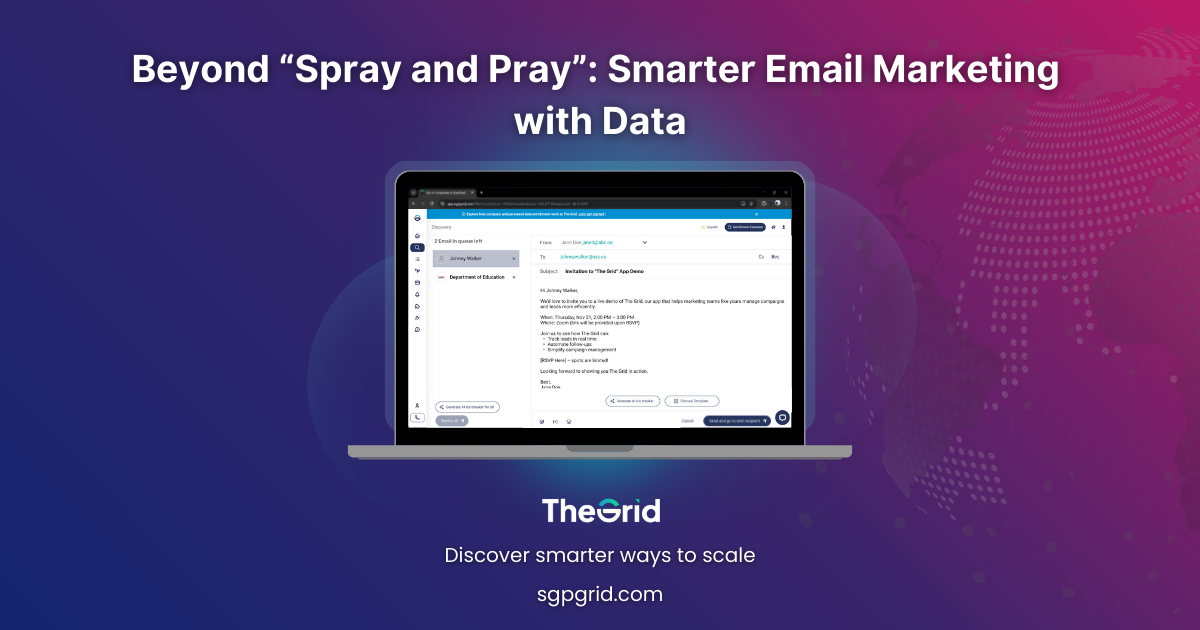
Email remains one of the most powerful and cost-effective channels for B2B outreach. Yet many SMEs and startups still rely on the outdated “spray and pray” approach, sending the same generic message to thousands of contacts and hoping something sticks.
In markets like Singapore and Southeast Asia, where budgets are tight and competition is fierce, this approach wastes resources and damages deliverability. To succeed, SMEs must embrace data-driven email campaigns that prioritize segmentation, personalization, and timing.
With structured insights from The Grid sales intelligence, email marketing evolves from mass blasting to targeted email outreach in SEA, delivering messages that are relevant, timely, and far more likely to convert.

Why “Spray and Pray” Fails
The fundamental flaw with “spray and pray” email marketing is the lack of relevance.
It ignores context.
Sending the same email to a fintech firm, logistics startup, and retail chain dilutes impact. Each industry has unique challenges and priorities.
It harms sender reputation.
Low engagement leads to spam flags, reducing future campaign reach.
It wastes time and opportunities.
Instead of building relationships, teams chase volume over value.
For SME marketing in SEA, where every campaign must perform, mass emailing is no longer an option.
The Data-Driven Alternative
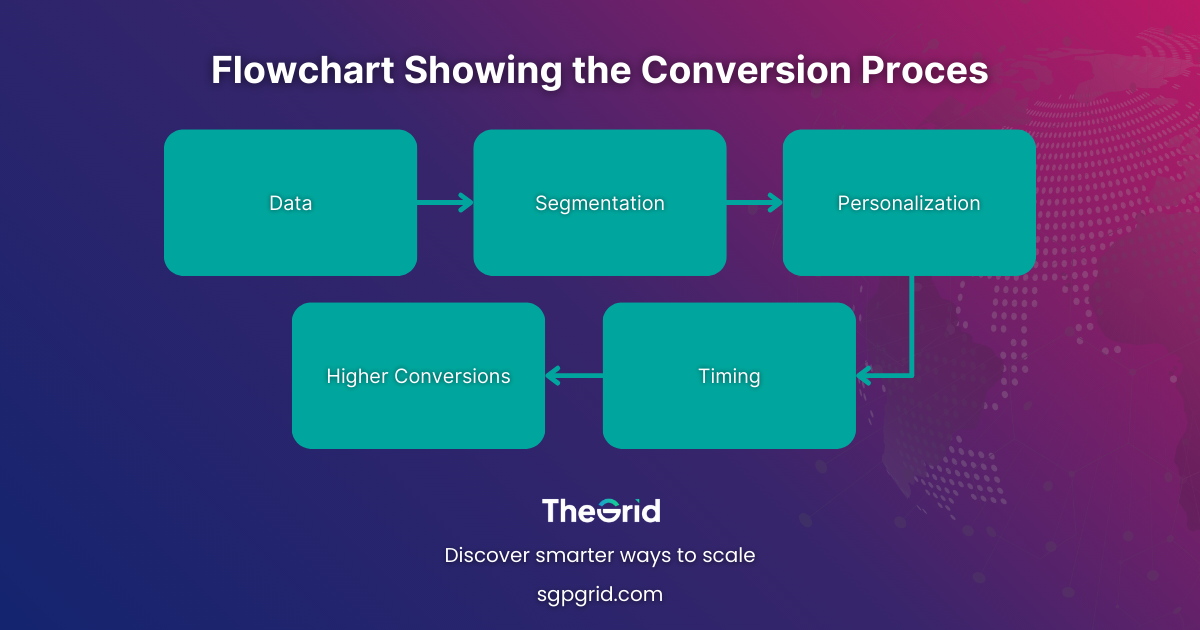
Data transforms email marketing from a gamble into a strategy. With firmographics, technographics, engagement history, and decision-maker data in SEA, SMEs can deliver emails that match real needs.
Segmentation for Relevance
Segmenting audiences improves performance dramatically. Examples:
- Segment by industry: Retail SMEs get content about POS integrations
- Segment by company size: Mid-sized firms get scalability-focused messaging
- Segment by region: Singapore SMEs receive content tied to local regulations
This structured data-driven email campaign approach ensures messages resonate with specific business realities.
Personalization that Matters
Personalization goes beyond adding a name. Effective personalization includes:
- referencing the technologies a company uses
- acknowledging funding announcements or hiring trends
- highlighting pain points unique to the company’s sector
The deeper the relevance, the stronger the response, which creates authentic, personalized B2B emails.
Timing Based on Signals
Signals such as:
- recent funding
- new leadership hires
- regulatory changes
- technology upgrades
…indicate readiness to engage. Aligning email campaigns with these signals increases the chance of meaningful replies, boosting startup marketing growth and accelerating conversions.
Tools that Enable Smarter Email Marketing
Platforms like The Grid give SMEs access to:
- verified business data Singapore
- real-time firmographics
- technographic insights
- precise decision-maker contacts
These insights can then be synced into email automation tools, enabling personalization at scale and making campaigns more efficient and impactful.
Real-World Example
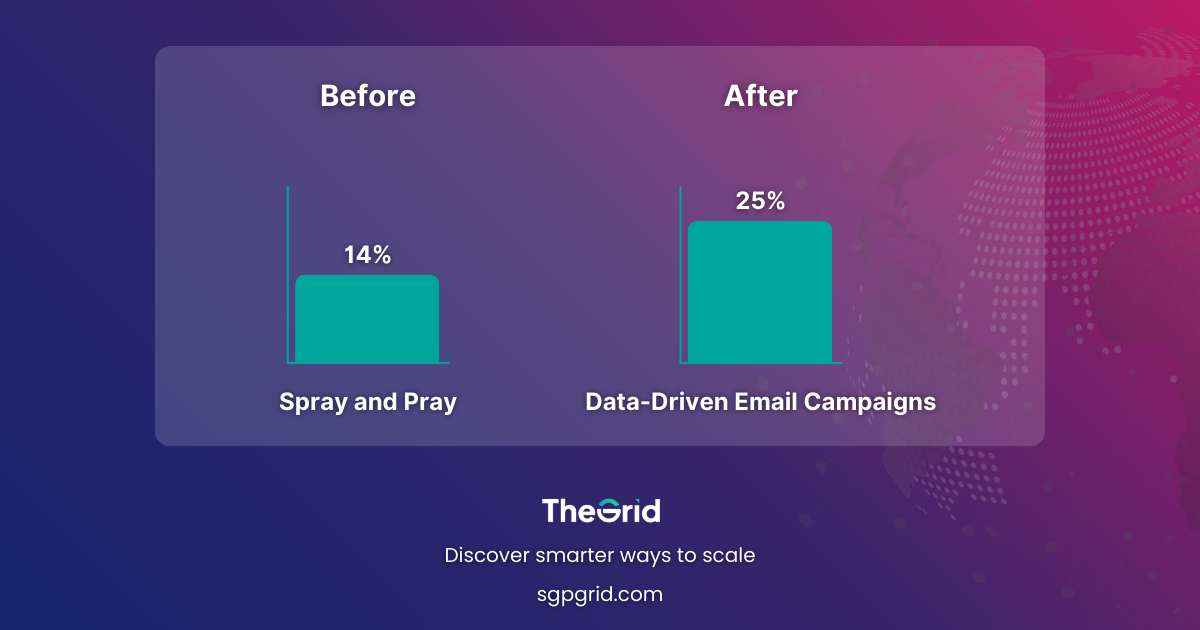
A SaaS startup in Singapore once sent thousands of identical emails each month with poor results. By using company intelligence to segment prospects by industry and referencing specific technologies (e.g., “We saw your team uses X platform…”), the company:
- tripled open rates
- doubled response rates
- increased qualified meetings despite sending fewer emails
The shift from volume to relevance changed everything.
Conclusion
Email marketing is not dead, it has simply evolved. For SMEs and startups in Singapore and Southeast Asia, success depends on moving beyond spray and pray and embracing a more intentional, data-driven approach.
By segmenting audiences, personalizing content, and aligning outreach with buying signals, businesses can unlock higher engagement, improved deliverability, and better conversions.
Smart email marketing requires smart data. With the help of The Grid sales intelligence, SMEs can deliver emails that speak directly to needs and drive meaningful results.
Disclaimer
This article is for informational purposes only. Data and examples are based on publicly available information and insights from The Grid’s platform. Results may vary depending on business context.
References
- HubSpot: https://blog.hubspot.com/marketing/email-marketing
- Statista: https://www.statista.com/topics/4240/email-marketing
- LinkedIn State of Sales SEA: https://business.linkedin.com/sales-solutions/state-of-sales