B2B data is now central to how SMEs attract leads, qualify prospects, and scale their sales operations. For businesses in Singapore and Southeast Asia, company intelligence and decision-maker insights unlock clearer targeting, sharper segmentation, and stronger conversion rates. But with increased access to data comes increased responsibility.
In today’s environment, ethical B2B data use in Singapore is essential. Buyers expect transparency, regulators enforce strict standards, and brands that misuse data risk long-term reputational damage. By embracing data-driven marketing compliance, SMEs can build trust, differentiate themselves, and strengthen the impact of both sales and marketing.
What Ethical Data Use Means in B2B Contexts
Ethical data use is more than obeying the law, it is a commitment to responsible, transparent, respectful interaction. In B2B marketing and sales, this means:
- Collecting and using information legitimately
- Targeting only companies and roles that genuinely fit your ICP
- Being upfront about why you are reaching out
- Prioritizing relevance, accuracy, and context
- Delivering value, not mass, generic outreach
Practicing these principles strengthens B2B trust building in SEA, making your outreach feel informed rather than intrusive.
Why Ethics in Data Use Matters for SMEs
SMEs often work in highly connected industries where word travels fast. Practices such as excessive cold emailing, irrelevant messaging, or relying on unverified lists can quickly damage credibility. Practicing ethical marketing Singapore protects your reputation and improves long-term performance.
Ethical data use drives several benefits:
- improved conversation quality
- stronger relationships with prospects
- higher reply, meeting, and demo rates
- reduced regulatory and compliance risks
- a trustworthy brand that stands out in SEA markets
In competitive environments, SME sales ethics in SEA becomes a strategic advantage and not a limitation.
Best Practices for Ethical Data Use
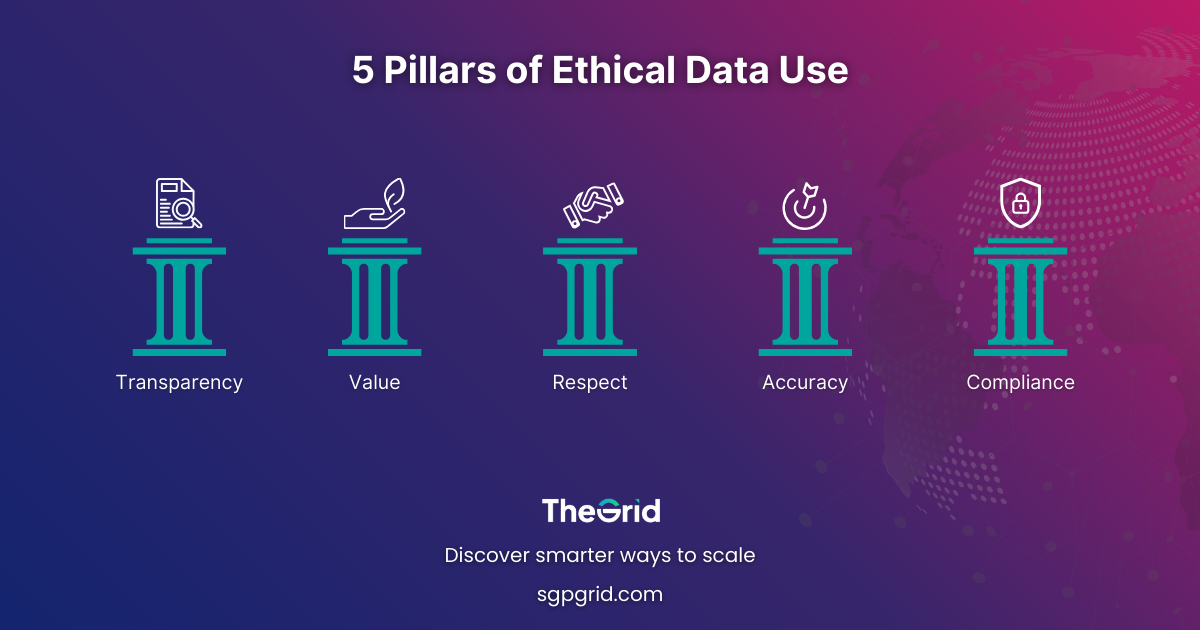
Collect Data Transparently
Be clear and honest about what information you are collecting and why. Transparent opt-ins, privacy statements, and consent-based lead capture support SME data protection and build trust early.
Use Data for Value Creation
Ethical use means using data to make outreach more helpful. Tailor your messages to industry needs, pain points, or growth signals. Relevance shows respect for the prospect’s time.
Avoid Overuse and Spam
Even accurate data can be misused if outreach becomes excessive. Ethical practice means balancing persistence with respect.
Verify and Update Regularly
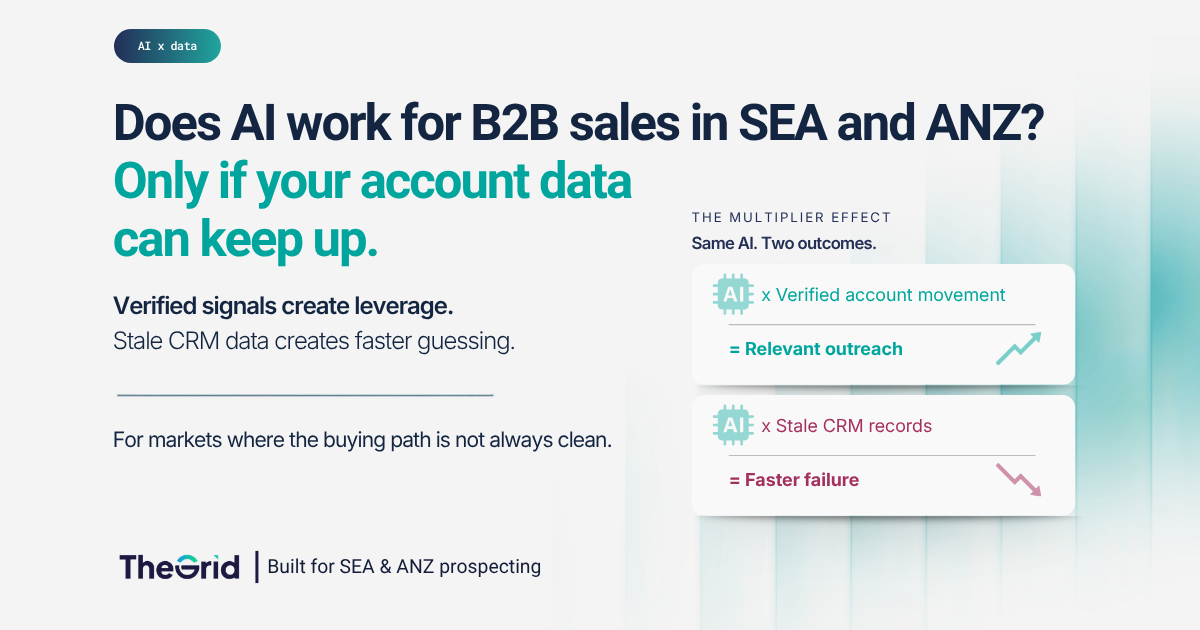
Outdated or inaccurate contact details harm both sales productivity and trust. Using The Grid sales intelligence ensures your teams work with verified, accurate, and updated data, which then reduces errors and improves engagement.
Align with Regional Compliance
Ethical B2B data use must align with PDPA, GDPR, and SEA data laws. Treat compliance not as a checklist but as an ongoing part of data-driven marketing compliance.
Real-World Example
A Singapore logistics SME previously depended on purchased contact lists, which led to high bounce rates and low engagement. After shifting to responsible B2B prospecting using verified company intelligence from The Grid, the team contacted only companies with relevant operations and real purchasing need.
The results were immediate:
- drastically reduced bounce rates
- increased reply and demo bookings
- prospects described messages as “useful” and “timely”
- fewer but significantly higher-quality opportunities
- improved sales pipeline efficiency
An ethical shift became an operational and financial improvement.
Conclusion
Ethical data use is not just good practice, it is a growth strategy. By aligning with ethical B2B data use in Singapore, implementing transparent processes, using verified insights through The Grid sales intelligence, and committing to data-driven marketing compliance, SMEs can scale their efforts without compromising trust.
In Singapore and Southeast Asia, businesses that prioritize ethics gain more than compliance. They gain a competitive edge, stronger relationships, and long-term, sustainable growth.
Disclaimer
This article is for informational purposes only. Data and examples are based on publicly available information and insights from The Grid’s platform. Results may vary depending on business context.
References
- Personal Data Protection Commission Singapore (PDPC): https://www.pdpc.gov.sg
- General Data Protection Regulation (GDPR): https://gdpr-info.eu
- Gartner Data Ethics Insights: https://www.gartner.com/en/insights/data-ethics