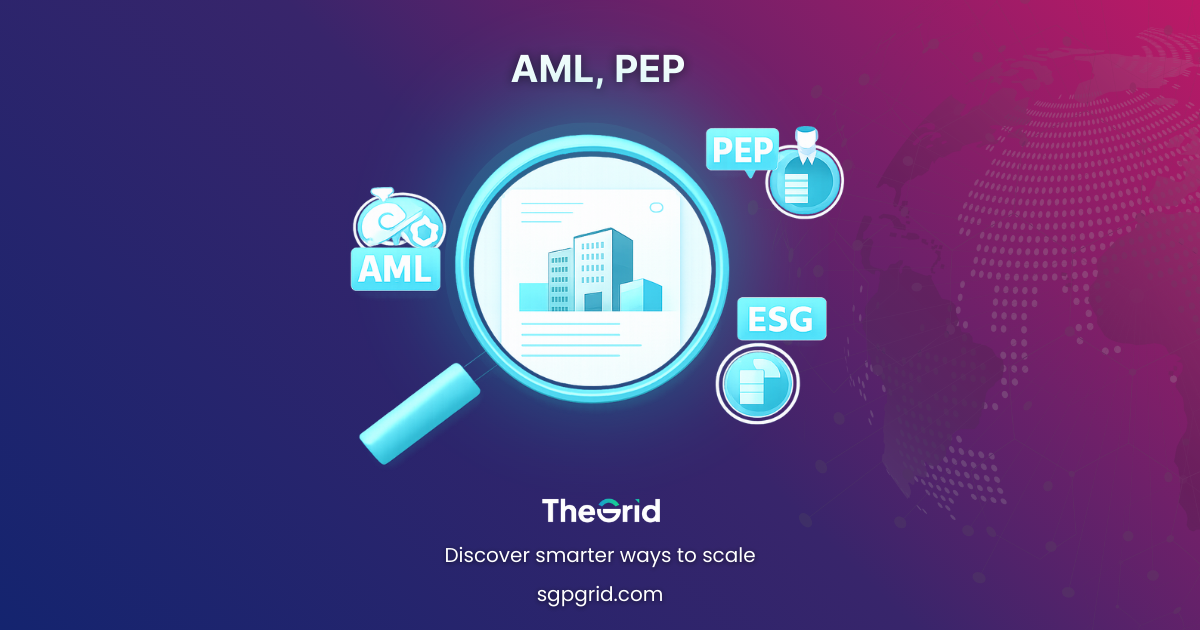
For many SMEs and startups, prospecting is about finding the next customer, partner, or contract. But in today’s regulatory climate, growth must be paired with risk awareness. AML screening in Singapore, PEP risk prospecting, and ESG risk compliance SEA are no longer “enterprise-only” concerns, these checks increasingly affect smaller businesses as well, especially when selling into regulated industries or expanding across borders.
When SMEs screen prospects early, they protect their brand, reduce wasted outreach, and avoid accounts that could introduce compliance exposure. If done well, risk screening becomes part of modern SME prospecting best practices, and a strong signal that your business takes responsible growth seriously.
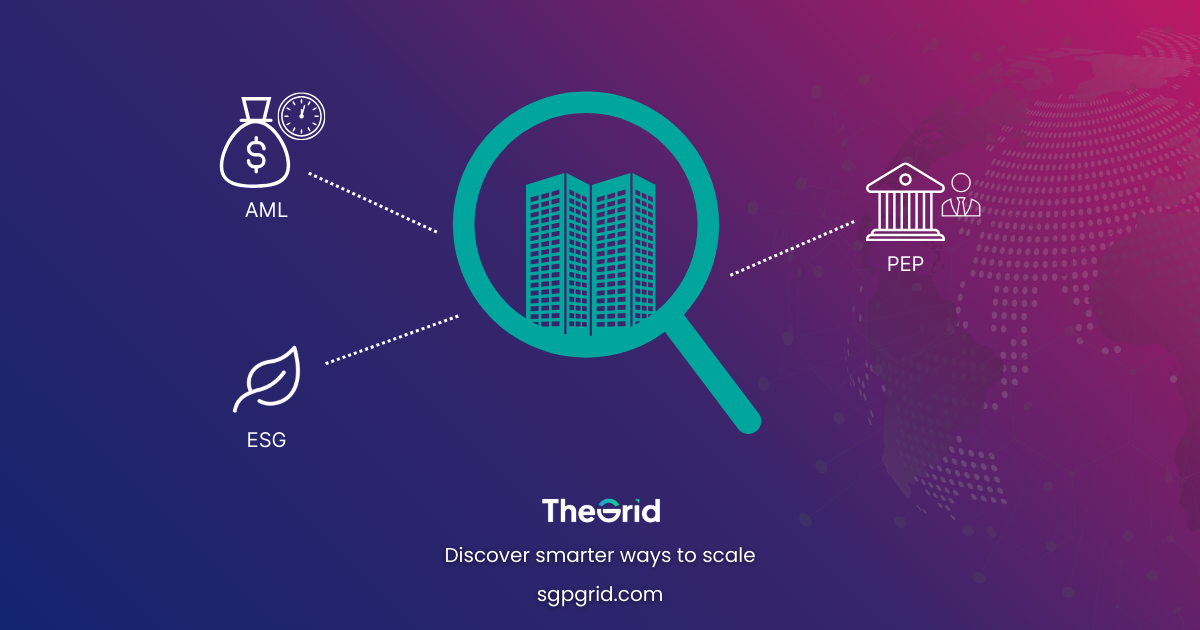
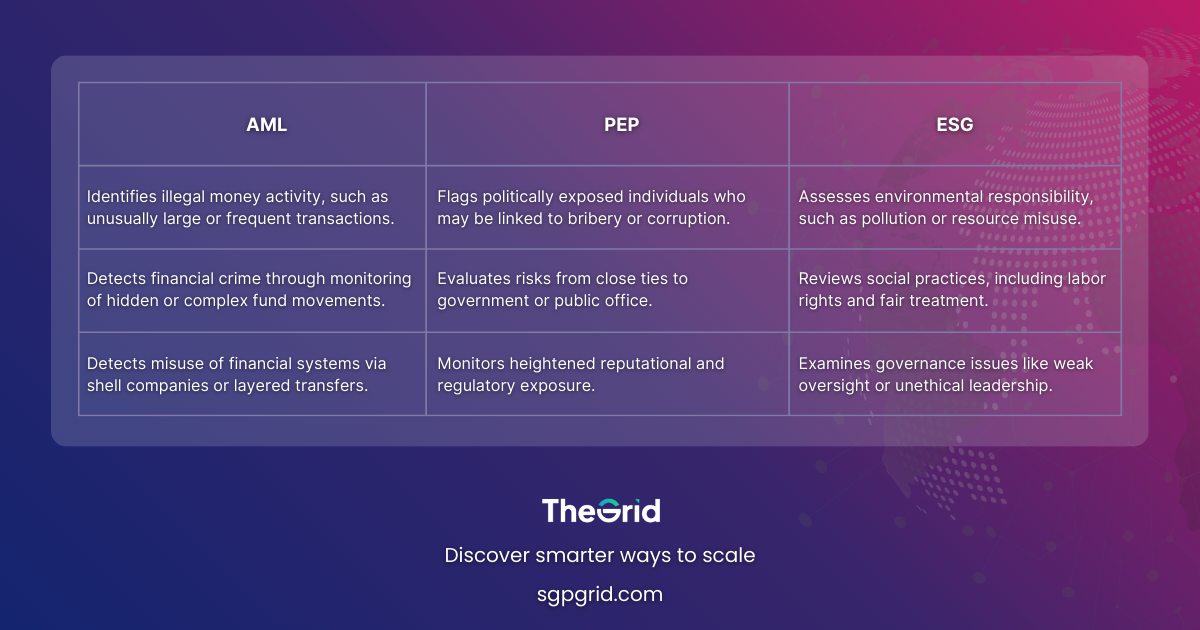
Understanding AML, PEP, and ESG Risks
AML (Anti-Money Laundering)
AML frameworks aim to prevent illegal funds from entering legitimate systems. For SMEs, engaging with companies tied to suspicious activity can trigger operational headaches, reputational fallout, or downstream compliance concerns, especially if your business touches finance, payments, trade, or cross-border transactions.
PEP (Politically Exposed Persons)
PEPs are individuals with prominent public positions (or close associates). PEP-linked entities can carry higher exposure to bribery, corruption, or reputational risk. That’s why PEP risk prospecting requires extra caution, even for SMEs that don’t operate in banking.
ESG (Environmental, Social, and Governance)
ESG risk goes beyond sustainability messaging. It includes issues like labor practices, governance red flags, and environmental harm. In SEA markets where ESG expectations are rising, ESG risk compliance in SEA can influence whether prospects, partners, or investors view your business as credible.
Why Screening Matters for SMEs
SMEs typically don’t have full compliance teams, but the risks of skipping checks are very real. A single problematic account can create reputational damage that takes years to repair. Screening also improves efficiency: sales teams avoid building pipelines around prospects that later become “no-go” accounts.
More importantly, risk screening supports startup sales risk management, which helps lean teams make better decisions faster, and demonstrating professionalism in front of customers, partners, and stakeholders.
How to Screen for Risks During Prospecting
Use Reliable Data Sources
Risk checks are only as good as your data. Using tools that combine company profiles with risk indicators supports more consistent B2B compliance checks. This is where solutions like The rid risk intelligence can help teams spot red flags early, before time is invested in outreach and nurturing.
Check Sanctions and Watchlists
Cross-reference target accounts against reputable sanctions and watchlists (including sources linked to MAS and global bodies). This helps identify restricted or high-risk entities before engagement.
Monitor ESG Disclosures
Review ESG reporting, controversies, enforcement actions, and credible news signals. If ESG is a priority for your customers or investors, screening protects your reputation and strengthens positioning.
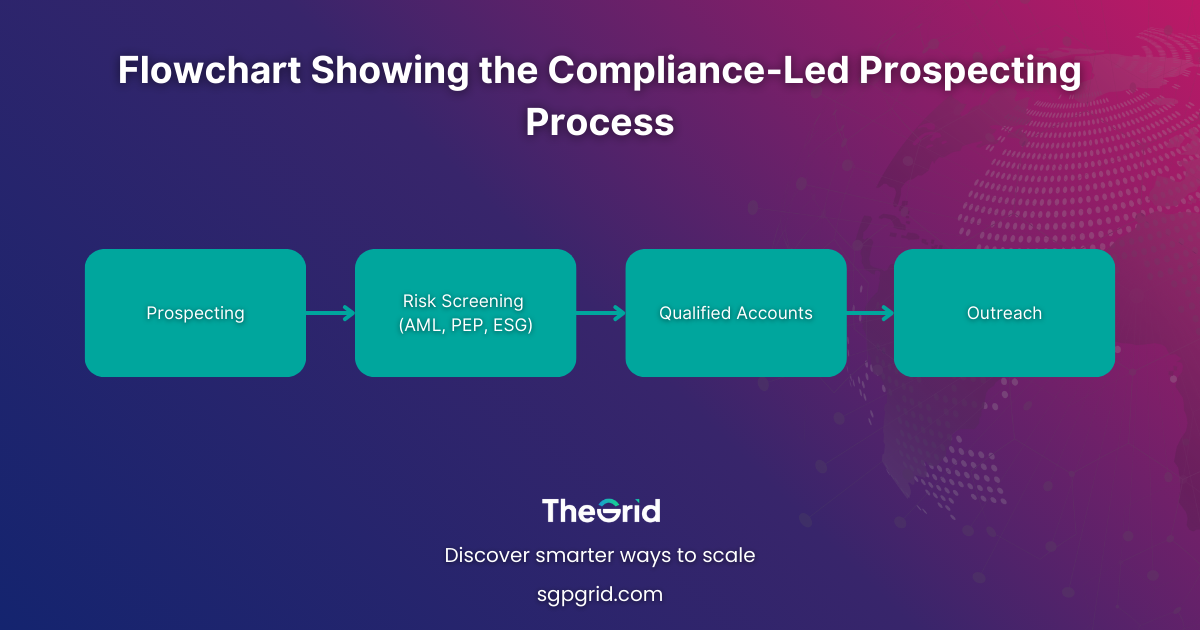
Combine Risk Screening with ICP
Don’t treat screening as a separate step. Add AML/PEP/ESG checks into your ICP workflow so every prospect is evaluated on:
- fit (industry/size/need) and
- risk (compliance and reputation exposure)
This makes screening part of responsible prospecting SEA rather than a last-minute “cleanup” step.
Combine Risk Screening with ICP
Create a simple internal rule set:
- Green: proceed with outreach
- Amber: proceed with caution / request more info
- Red: stop outreach and document why
Real-World Example
A Singapore-based fintech startup pursued a regional partner that later appeared on an international AML watchlist. The deal had to be abandoned after weeks of time spent on meetings and internal planning. After adopting early-stage risk screening and integrating checks into prospecting, the team reduced wasted effort and improved credibility with stakeholders by demonstrating stronger governance and discipline.
Conclusion
Prospecting isn’t just about finding more opportunities—it’s also about avoiding the wrong ones. By applying AML screening Singapore, strengthening PEP risk prospecting, and adopting ESG risk compliance SEA, SMEs can protect reputation, improve pipeline quality, and build more sustainable growth.
When risk checks are embedded into your workflow and supported with reliable tools—such as The Grid risk intelligence—teams can run consistent B2B compliance checks, improve startup sales risk management, and practice responsible prospecting SEA without slowing execution.
Disclaimer
This article is for informational purposes only. Data and examples are based on publicly available information and insights from The Grid’s platform. Results may vary depending on business context.
References
- Monetary Authority of Singapore (MAS): https://www.mas.gov.sg
- United Nations Sanctions List: https://www.un.org/securitycouncil/sanctions/information
- Global Reporting Initiative (GRI) on ESG: https://www.globalreporting.org