A CRM should make selling easier, but for many SMEs and startups, it becomes a messy database of incomplete fields, outdated contacts, and duplicate records. When that happens, pipeline reports become unreliable, outreach feels generic, and sales teams waste time cleaning data instead of closing deals. Simply put: you can’t supercharge CRM performance if CRM accuracy is poor.
That’s why data enrichment with CRM in Singapore matters. With the right enrichment process, SMEs across Singapore and Southeast Asia can upgrade their records with verified company intelligence, so the CRM becomes a usable system for targeting, personalization, and forecasting. This is one of the fastest ways to improve SME sales performance in SEA without adding headcount.

What is Data Enrichment?
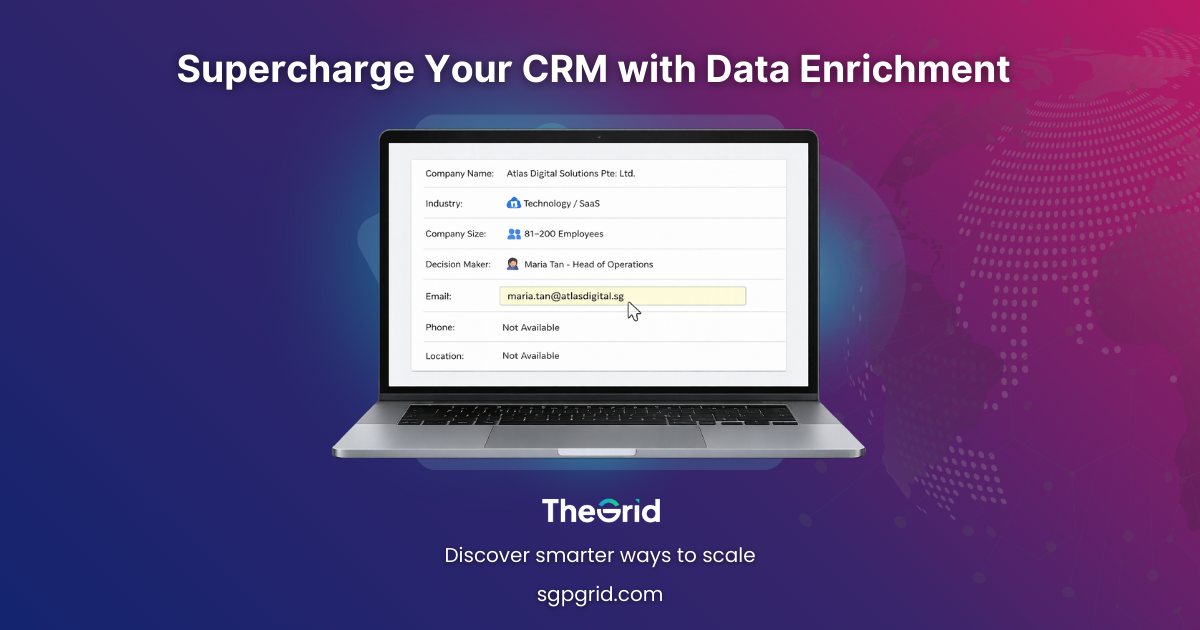
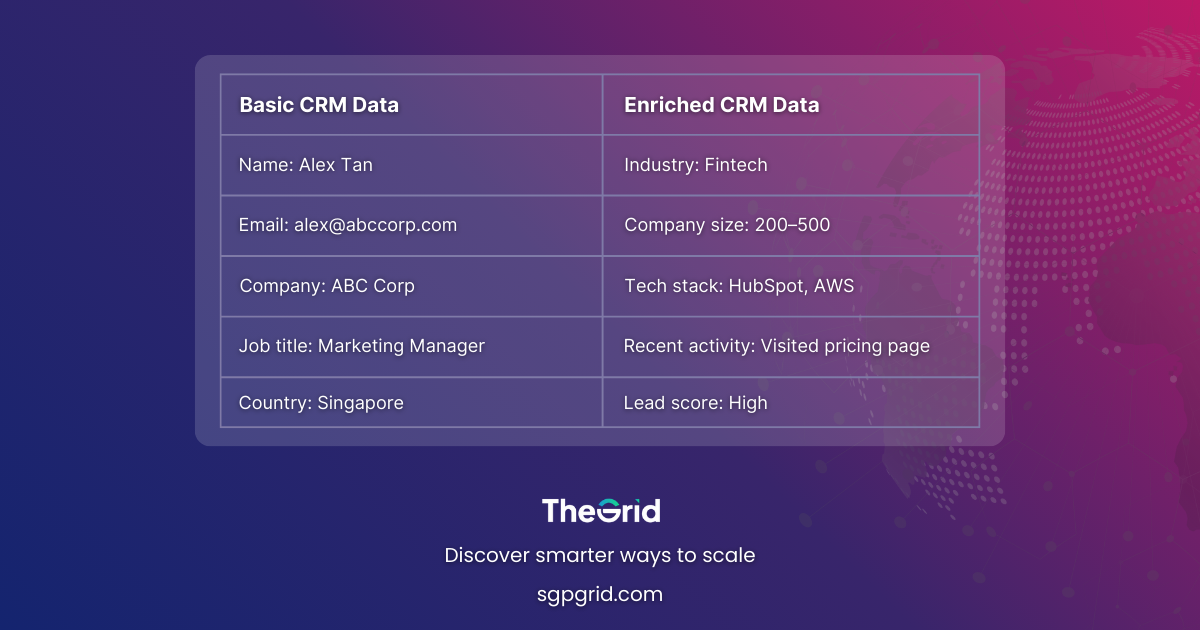
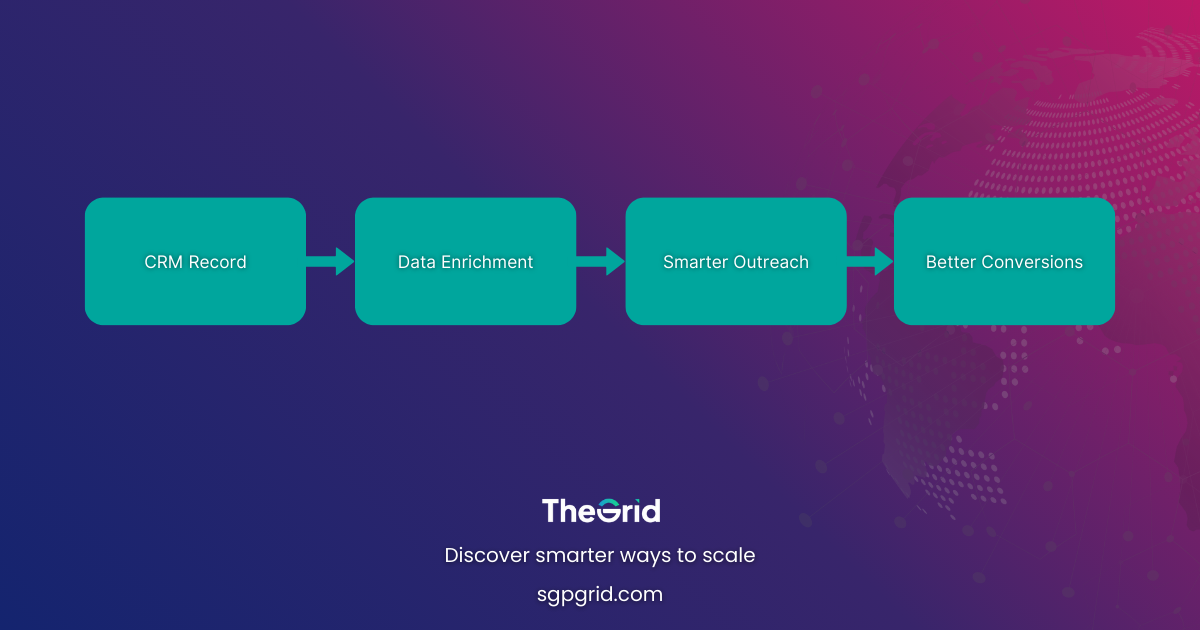
Data enrichment is the process of improving existing CRM records by adding missing, updated, and more useful attributes. Instead of working with bare-minimum fields (name, email, phone), enriched CRM data can include:
- Firmographics: industry, size, location, revenue band
- Technographics: tools used (CRM/ERP/cloud stack), digital maturity signals
- People data: decision-maker roles, seniority, department ownership
- Signals: hiring growth, expansions, or other indicators that help prioritize accounts
Example: If your CRM has “ABC Pte Ltd” with a generic info@ email, enrichment can add industry classification, headcount range, and the right decision-maker contacts, so sales can reach the correct person faster.
Why Data Enrichment Matters for SMEs
Without enrichment, CRMs often create more problems than they solve:
- Sales reps chase outdated contacts or generic inboxes
- Forecasts get inflated by duplicate or low-fit accounts
- Campaign targeting stays broad because profiles are incomplete
- Personalization is limited, so response rates drop
With B2B data enrichment in SEA, the CRM becomes a practical intelligence hub that helps teams:
- Prioritize better accounts using ICP-fit attributes
- Improve CRM accuracy in Singapore by reducing outdated and incomplete records
- Personalize outreach with real context (industry, tech stack, growth stage)
- Improve pipeline hygiene and make reporting more reliable
- This is especially valuable for a startup CRM strategy, where the biggest constraint is time, not tools.
How SMEs Can Enrich CRM Data
1) Enrich the records that matter most first
Start with accounts currently in the pipeline (open opportunities, active prospects, churned/win-back lists). Enriching everything at once is slower and often unnecessary.
2) Add ICP-fit fields that actually drive decisions
Don’t enrich “everything.” Focus on the few fields that influence targeting and qualification, such as:
- industry/segment
- company size band
- location (SG/SEA)
- decision-maker role
- tech stack fit (if relevant)
3) Automate enrichment to keep data current
Manual updates don’t scale. Automated enrichment reduces admin work and ensures data doesn’t “decay” after a quarter. This is where The Grid CRM integration fits well: enrichment should be consistent, repeatable, and easy for sales to trust.
4) Use enriched CRM data for better workflows
Once enriched, the CRM should immediately improve actions like:
- segmented campaigns by industry
- lead routing by role/region
- prioritized call lists by ICP-fit
- smarter sequences using context and signals
Real-World Example
A Singapore-based HR SaaS team had CRM records with generic contacts and missing firmographic fields, making outreach inefficient. After implementing enrichment, they added decision-maker roles, industry tags, and basic tech indicators. Within one quarter, the sales team reduced time spent researching accounts and increased qualified opportunities, because reps were contacting the right roles at the right companies with clearer context.
Conclusion
If your CRM feels like a “storage folder” instead of a sales engine, the issue is usually data, not the tool. Data enrichment upgrades your CRM from incomplete records to actionable intelligence. With better CRM accuracy in Singapore, SMEs can target faster, personalize better, and forecast with more confidence.
For growing teams, supercharge CRM performance starts with one simple shift: make your CRM data trustworthy and keep it updated.
Disclaimer
This article is for informational purposes only. Data and examples are based on publicly available information and insights from The Grid’s platform. Results may vary depending on the business context.
References
- HubSpot: https://blog.hubspot.com/sales/data-enrichment
- Gartner CRM Insights: https://www.gartner.com/en/insights/crm-customer-experience
- Salesforce CRM Guide: https://www.salesforce.com/crm