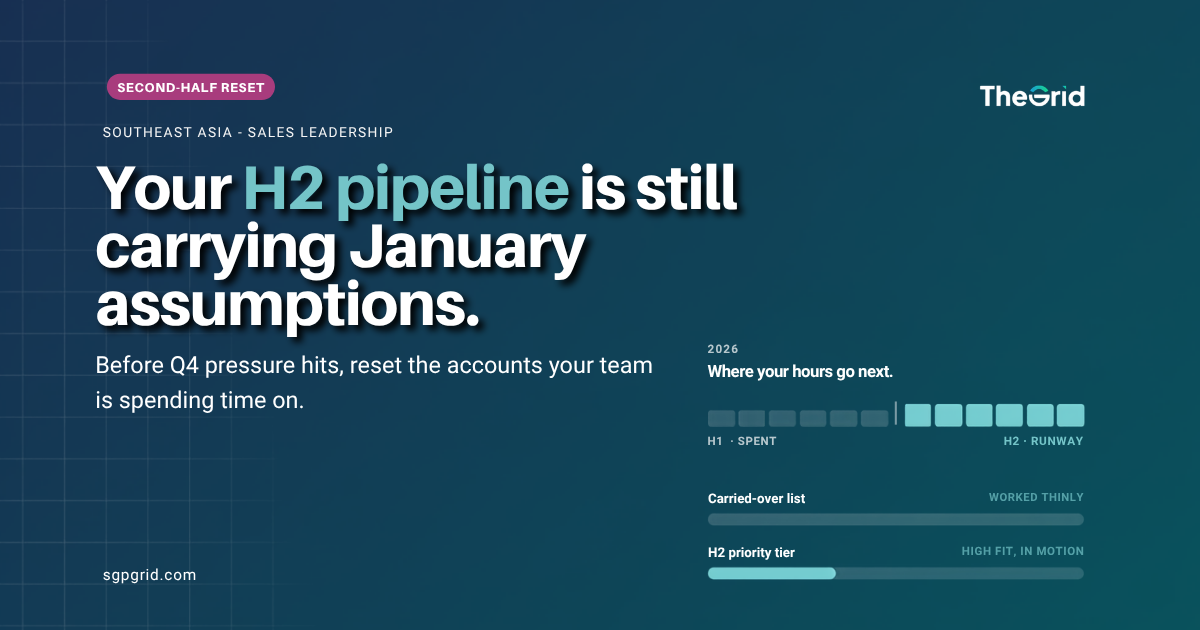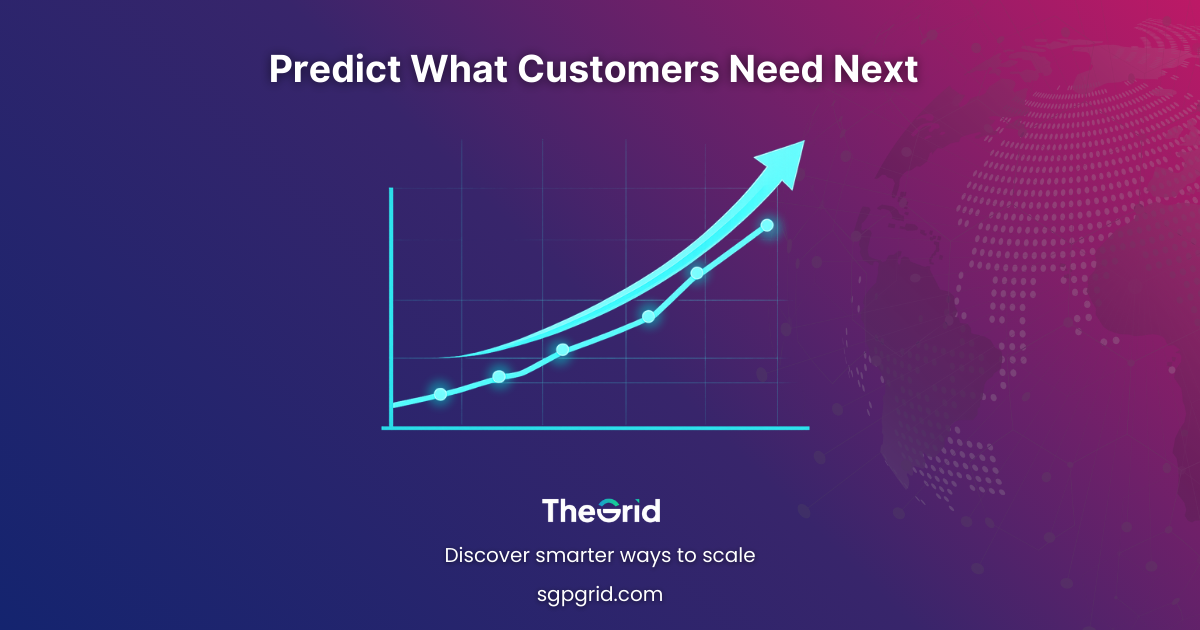
For SMEs in Singapore and Southeast Asia, marketing can’t rely on post reports reporting alone. The teams that win don’t just track results, they predict what customers will need next.
That’s what predictive analytics in B2B is for: using patterns in company data, engagement, and buying signals to forecast intent. This is so you can target the right accounts earlier, personalize campaigns better, and improve conversions without wasting budget on low-fit leads.
What is Predictive Analytics in B2B Marketing?
Predictive analytics uses historical and current signals to estimate what a customer or account is likely to do next, such as:
- request a demo,
- respond to outreach,
- increase spending,
- or enter an active buying cycle.
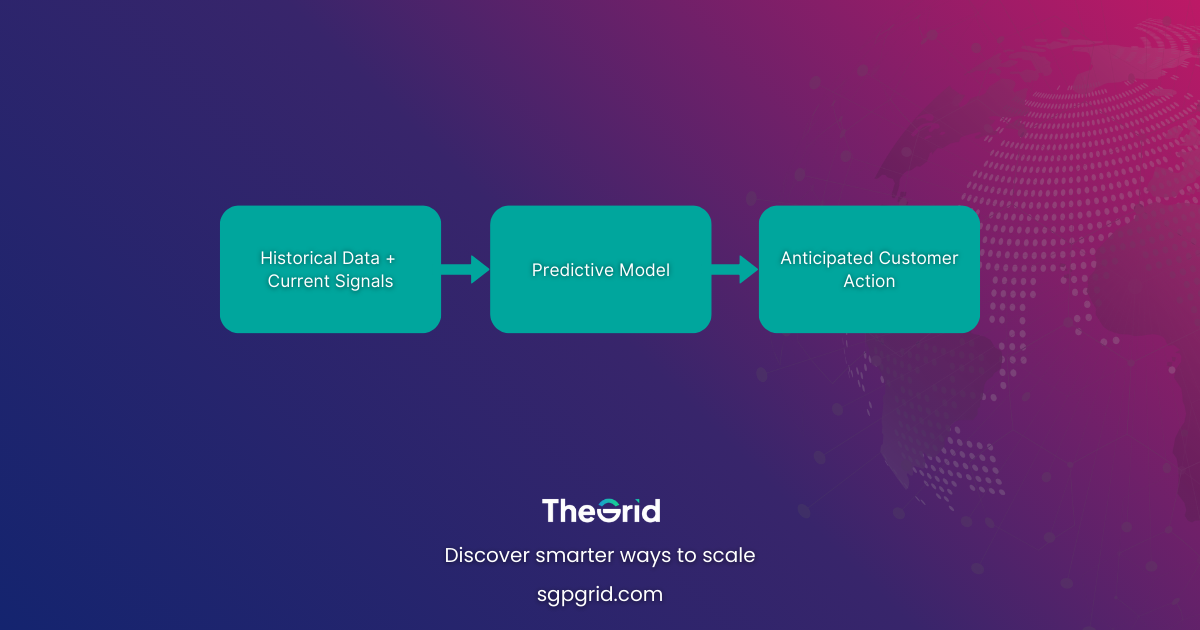
Instead of guessing, predictive marketing uses a structured approach:
Inputs (data and signals) to Prediction (likelihood) to Action (next best step)
Why Predictive Analytics Matters for SMEs
SMEs often have lean teams and limited time. Predictive analytics helps you focus on what moves the needle:
- Prioritize quality leads (not just more leads)
- Improve timing (reach accounts when intent is rising)
- Reduce wasted spend on low-fit segments
- Support better forecasting for campaigns and pipeline
This pairs especially well with SEA markets where datasets can be fragmented and outdated, so having verified, localized intelligence matters.
The 4 Signals Predictive B2B Marketing Should Track
To make predictions useful, focus on signals that reflect real readiness and avoid fixating on vanity metrics.
1) Firmographics (Fit)
Firmographics show whether an account matches your ICP:
- industry
- employee size
- location
- growth stage
Use this to filter out accounts that were never likely to convert.
2) Buying Signals (Readiness)
Buying signals indicate momentum like:
- hiring spikes in relevant functions
- funding announcements
- regional expansion
These signals help you anticipate demand earlier and engage at the right moment.
3) Engagement (Interest)
Track intent-like actions:
- repeat visits to key pages
- webinar attendance
- case study downloads
- high-intent email clicks
Engagement tells you who is researching and who is ready to engage. But remember, you still need fit and readiness to prioritize correctly.
4) People / Decision-Maker Data (Access)
Even the best account won’t convert if you’re talking to the wrong person.
Decision-maker clarity improves response rates and speeds up deal cycles, especially when paired with relevant timing signals.
Real-World Example
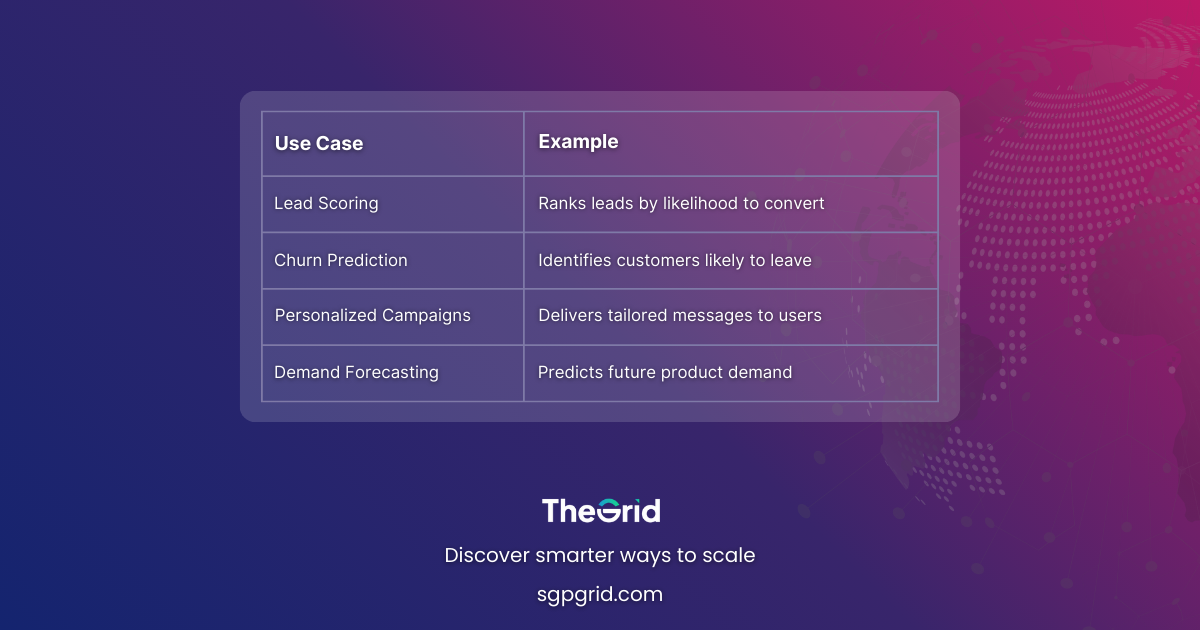
Here’s how predictive analytics shows up in day-to-day marketing:
Predictive lead scoring
Rank accounts by likelihood to convert using fit, signals, and engagement. This supports smarter segmentation and budget allocation.
Campaign personalization by anticipation
Predict likely needs by segment, including industry, growth stage, and signals, then tailor messages:
- scaling results to efficiency
- expansion goes to regional readiness
- hiring for workflow or operations needs
Pipeline support and forecasting
When marketing tracks predictive signals aligned to ICP, the pipeline becomes cleaner and forecasting becomes less guesswork.
How The Grid Supports Predictive, Data-Driven Marketing in Southeast Asia
Predictive analytics is only as good as the data behind it. For many SMEs, the challenge is incomplete or unreliable Southeast Asia data.
The Grid helps by supporting the essentials your predictive approach needs:
- verified company data (for fit)
- decision-maker insights (for access)
- market + growth context (for readiness)
- workflows that reduce manual research time so teams can act faster
Quick Example (Simple Scenario)
A B2B SaaS SME targeting compliance teams notices a pattern:
- companies often evaluate tools after expanding headcount and hiring compliance roles.
With predictive analytics, the team:
- filters accounts by firmographics (ICP fit),
- monitors hiring signals (readiness),
- identifies the right leaders (people data),
- triggers a campaign before competitors react.
Result: more relevant outreach, fewer wasted impressions, and higher conversion efficiency.
Risks and Considerations
Predictive analytics improves outcomes, but only if managed responsibly:
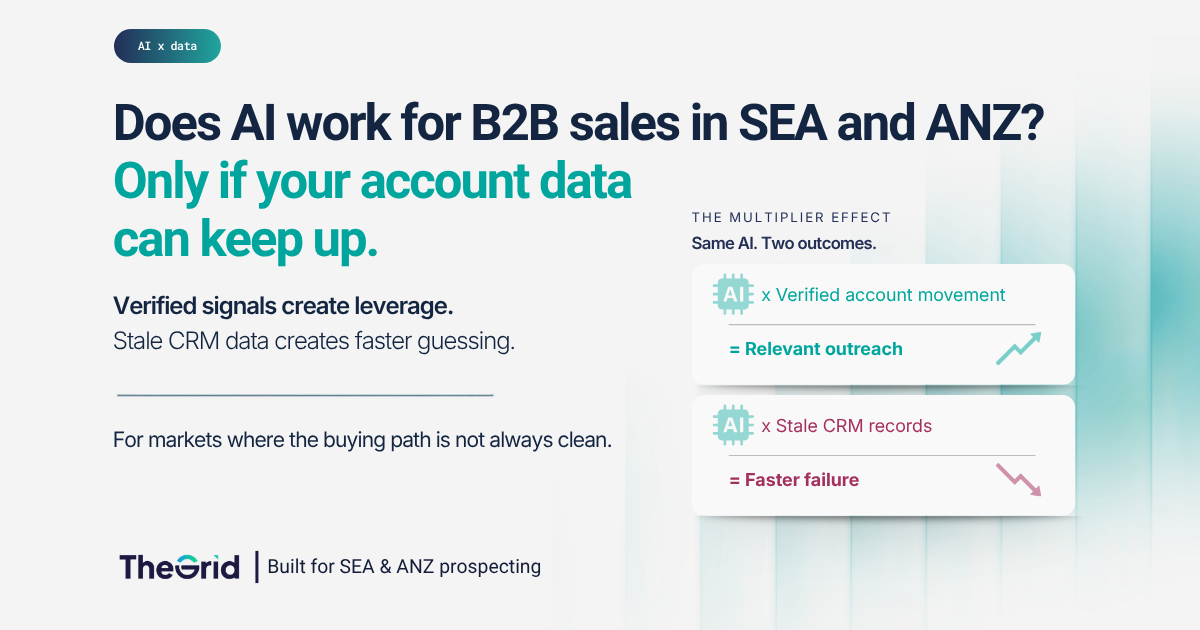
- Data quality: inaccurate or outdated data leads to unreliable predictions.
- Over-automation: personalization must still feel human.
- Compliance: ensure responsible data use aligned with privacy expectations.
Conclusion
Predictive analytics in B2B marketing helps SMEs in Singapore and SEA anticipate customer needs earlier by combining fit (firmographics), readiness (buying signals), interest (engagement), and access (decision-maker clarity).
It’s not about predicting perfectly. It’s about prioritizing smarter, so every campaign has a higher chance of turning into a real pipeline.
Disclaimer
This article is for informational purposes only. Data and examples are based on publicly available information and insights from The Grid’s platform. Results may vary depending on the business context.
References
- HubSpot: https://blog.hubspot.com/marketing/predictive-analytics
- Gartner Predictive Analytics Insights: https://www.gartner.com/en/insights/analytics/predictive-analytics
- PDPC Singapore: https://www.pdpc.gov.sg