Sales success depends on more than identifying the right companies, it requires engaging them at the right moment. Even the best-fit prospect won’t convert if they’re not ready to move. For SMEs and startups in Singapore, Southeast Asia, and ANZ, recognizing buying signals in B2B Singapore can significantly improve conversion rates, reduce sales friction, and shorten deal cycles.
Buying signals are behaviors or data points that reveal a company’s readiness to purchase. Whether it’s rapid hiring, new funding, tech upgrades, or engagement with industry content, these signals reflect company buying behavior and help businesses anticipate demand. When SMEs learn to interpret these signs, they gain a competitive edge and strengthen their overall SME sales strategy.

Key Buying Signals to Watch
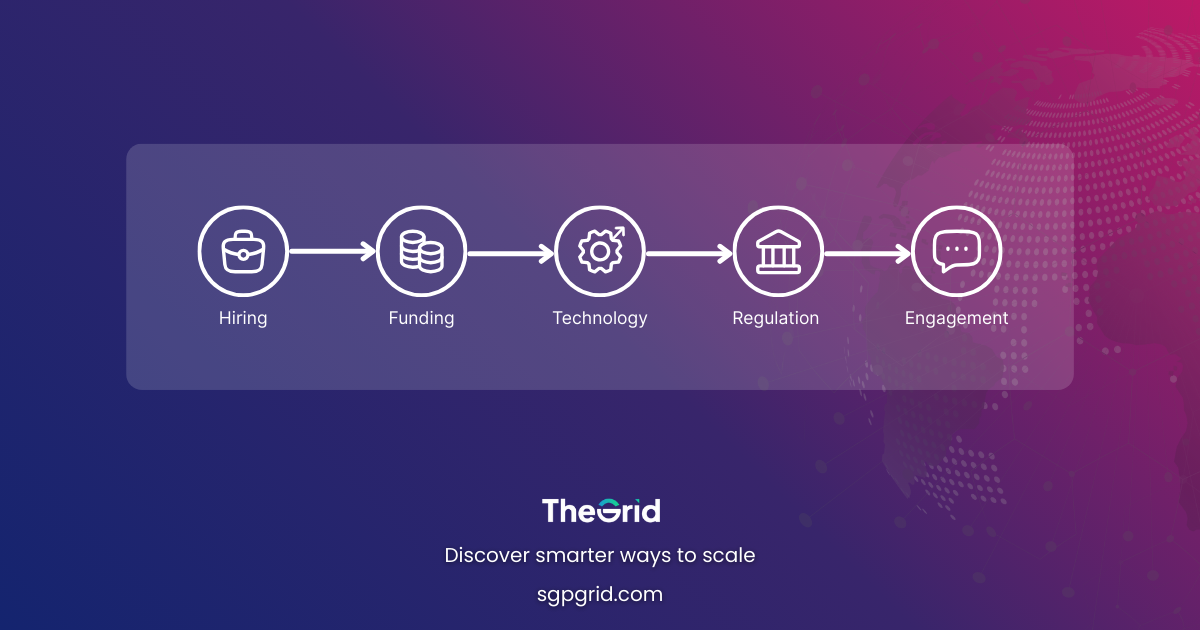
1. Rapid Hiring or Team Expansion
Companies that hire aggressively, especially in functional areas tied to your solution, are often preparing for growth. If a firm is hiring multiple IT, finance, or compliance roles, it's a strong indicator that they may soon need tools or services that support scaling.
This hiring momentum is one of the most reliable sales timing signals.
2. New Funding Announcements
Fresh funding almost always leads to increased purchasing activity. Companies with new capital typically adjust budgets, scale operations, and invest in systems that help them grow.
For SMEs monitoring ready-to-buy leads in SEA, tracking funding rounds provides early visibility into high-potential accounts.
3. Technology Upgrades or Shifts
When a business shifts from legacy systems to cloud platforms or invests in new technology, they often create demand for complementary tools, integrations, or security layers.
Example:
If a company migrates to a cloud payroll system, there may be openings for automation, compliance, or workforce analytics solutions.
Understanding these tech signals helps SMEs prioritize leads in Singapore based on real buyer intent.
4. Regulatory or Market Changes
Regulatory updates often push businesses to act quickly. In Singapore, changes from MAS or SGX can trigger immediate needs for compliance solutions, reporting tools, or ESG platforms.
SMEs that track these triggers can approach prospects at the exact moment purchase urgency increases.
5. Content Engagement
When prospects download guides, attend webinars, read case studies, or repeatedly visit product pages, they are signaling interest and evaluating options.
This engagement is a clear indicator of active research and often precedes direct outreach.
Tracking engagement across channels supports stronger startup sales growth by focusing efforts on interested buyers.
Why Buying Signals Matter for SMEs
SMEs often have limited resources. They cannot afford to chase every lead. Buying signals allow teams to prioritize, focusing on prospects actively moving toward a purchase.
Benefits include:
- Improved reply and demo rates
- More meaningful conversations
- Shorter sales cycles
- More accurate pipeline forecasting
- Better use of sales team capacity
In competitive SEA markets, acting on buying signals strengthens conversion efficiency and creates a measurable advantage over competitors relying on cold, untimed outreach.
How to Act on Buying Signals
Track Signals Continuously
Do not depend on chance. Use tools like The Grid sales intelligence to monitor hiring, funding, technology adoption, and regulatory exposure with real-time visibility.
With decision-maker data in SEA and verified business data Singapore, outreach becomes significantly more accurate.
Align Messaging with Context
Your outreach should reflect why you’re contacting them now:
- Funding: focus on scale and efficiency
- Hiring: highlight productivity or workflow improvements
- Regulatory changes: emphasize compliance or reporting support
- Tech upgrades: discuss integrations or optimization
Context builds trust and boosts response rates.
Move Quickly
Buying signals fade. Acting while the intent window is open ensures your message arrives before competitors and when urgency is highest.
Prospects in active buying cycles convert faster and more consistently.
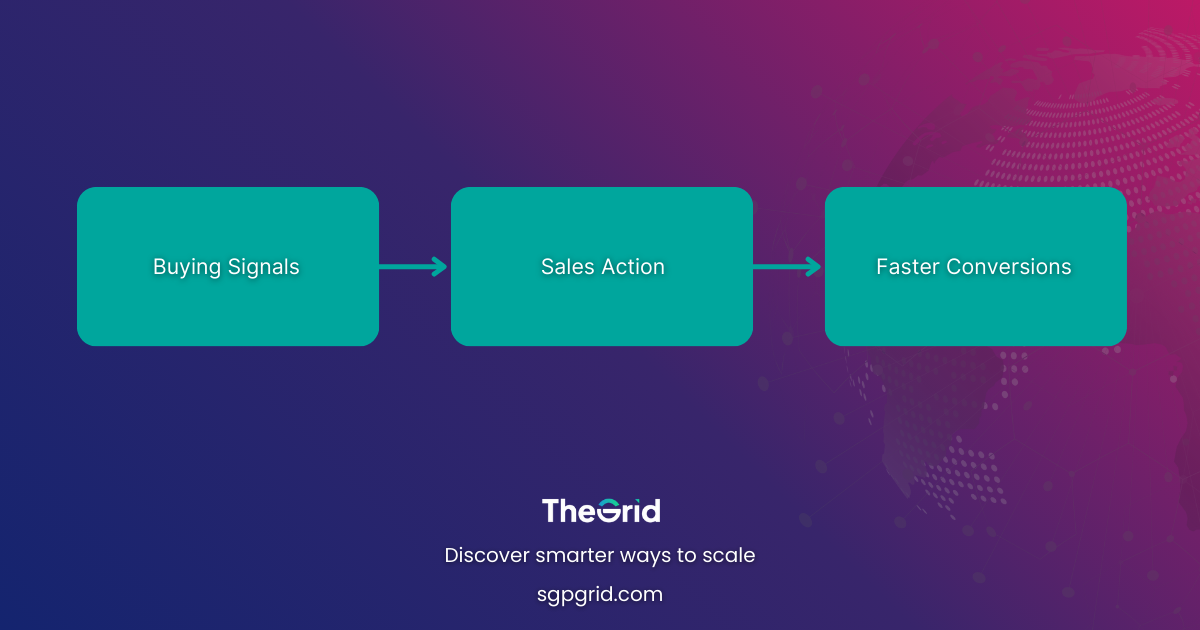
Real-World Example
An ESG reporting SaaS startup in Singapore used buying signals to refine its outreach. The team monitored which listed companies were hiring sustainability managers and which firms were newly obligated to comply with SGX ESG reporting rules.
Targeting these companies during this buying window led to a surge in demo bookings and faster deal closures, far outperforming generic outbound campaigns.
This example highlights the impact of timing: the right message at the right moment converts exponentially better.
Conclusion
Buying signals give SMEs and startups the context needed to approach prospects at the right time, not too early, and not too late. From hiring spikes and funding rounds to technology upgrades and regulatory changes, these signals reveal when companies are most likely to engage and purchase.
In Singapore and across Southeast Asia, where competition is high and resources are limited, recognizing buying signals is essential for sustainable growth. By acting quickly and strategically, SMEs can strengthen conversion rates, build higher-quality pipelines, and accelerate their path to long-term success.
Disclaimer
This article is for informational purposes only. Data and examples are based on publicly available information and insights from The Grid’s platform. Results may vary depending on the business context.
References
- Monetary Authority of Singapore (MAS): https://www.mas.gov.sg
- Singapore Exchange (SGX): https://www.sgx.com
- HubSpot: https://blog.hubspot.com/sales/buying-signals