For many SMEs and startups, prospecting often feels like a volume game. The assumption is simple: the more companies you reach out to, the higher your chances of converting. But in markets like Singapore, Southeast Asia, and ANZ, this mindset leads to wasted effort, exhausted sales teams, and bloated pipelines filled with unqualified prospects.
The most successful businesses practice smart prospecting, a discipline that focuses on targeting the right companies rather than simply adding more names to a list. By using data, insights, and structured methods, SMEs can prioritize quality over quantity—boosting efficiency, improving conversions, and driving sustainable sales growth.

What is Smart Prospecting?
Smart prospecting is a strategic approach to identifying and engaging companies that closely match your Ideal Customer Profile (ICP). Instead of broad, unfocused outreach, this method emphasizes fit, readiness, and buying triggers.
For example, a SaaS company offering HR compliance tools in Singapore should not target every SME. A smarter approach would be to prioritize regulated industries like finance, healthcare, logistics, where compliance demands are higher and solutions have stronger relevance.
This mindset shift helps SMEs align their SME sales strategy in SEA with real customer needs, ensuring every outreach has a higher chance of converting.
Why Quality Beats Quantity in Prospecting
Quantity-driven prospecting may fill a pipeline quickly, but it rarely leads to consistent results. Sales teams waste time on companies that have no need, no budget, or no urgency. This reduces morale and skews conversion forecasts.
Smart prospecting, on the other hand, focuses on quality vs quantity leads. By engaging accounts that closely match your ICP, teams experience:
- higher-quality conversations
- shorter sales cycles
- stronger customer relationships
- better forecasting accuracy
Studies show that sales teams using targeted prospecting can improve conversion rates by up to 50% compared to broad outreach, which is crucial for SMEs with lean sales teams.

How to Practice Smart Prospecting
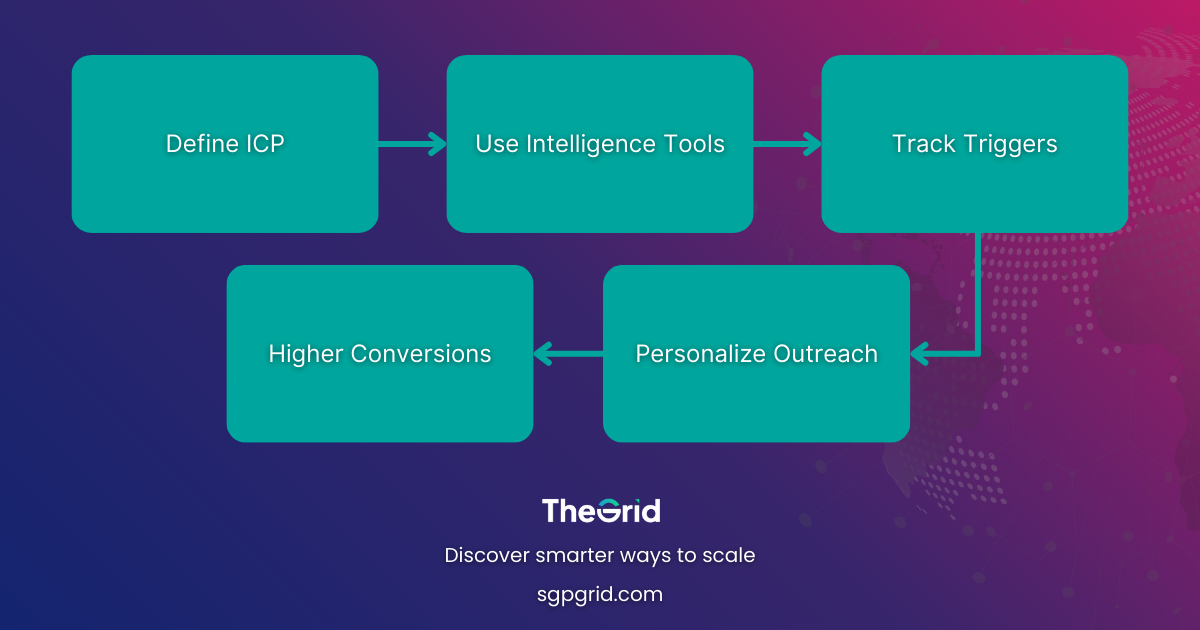
1. Define and Refine Your ICP
A clear Ideal Customer Profile is essential. Review your best-performing customers and refine your ICP using real data: industry, size, location, buying behavior, and growth triggers. Updating your ICP regularly ensures you continue to target right companies that benefit most from your solution.
2. Use Sales Intelligence Tools
Platforms like The Grid enable SMEs to filter prospects using firmographics, technographics, and intent signals. With The Grid’s sales intelligence, teams can use decision-maker data in SEA and verified business data Singapore to eliminate guesswork and focus on accounts that are active, relevant, and real opportunities.
3. Track Buying Triggers
Company growth events such as funding rounds, team expansion, new offices, regulatory changes create natural openings for outreach. Tracking these signals allows for timely, relevant engagement rather than cold, generic messaging.
4. Personalize Outreach Based on Data
Smart prospecting is not just about who you target, but how you engage them. Personalized outreach using company insights increases your chances of response. Reference their industry, challenges, or recent activities to demonstrate relevance.
Real-World Example
A fintech startup offering expense management tools. Initially, the team targeted every SME in Singapore, resulting in low reply rates and poor fit. After applying smart prospecting using The Grid’s sales intelligence, they focused on companies that had recently raised funding or expanded headcount. Outreach was personalized around scaling pain points.
Within six months, the startup’s qualified pipeline grew by 60%, and deal sizes increased—showing the impact of precision on startup sales growth SEA.
Conclusion
Smart prospecting helps SMEs and startups grow with precision. By focusing on the right companies—not just more companies—sales teams save time, improve conversions, and build relationships that deliver long-term value.
In competitive markets like Singapore and Southeast Asia, where resources are limited and competition is intense, smarter prospecting is not simply a better strategy—it is the only sustainable one. When paired with the right tools, insights, and sales intelligence, it becomes a clear path to predictable, high-quality revenue.
Disclaimer
This article is for informational purposes only. Data and examples are based on publicly available information and insights from The Grid’s platform. Results may vary depending on the business context.
References
- HubSpot: https://blog.hubspot.com/sales/prospecting
- Gartner Sales Data Insights: https://www.gartner.com/en/sales/topics/sales-data
- LinkedIn State of Sales SEA: https://business.linkedin.com/sales-solutions/state-of-sales