For SMEs and startups in Singapore and Southeast Asia, few things drain growth more than chasing leads that were never real opportunities. Sales teams spend hours prospecting, building lists, crafting outreach sequences, and following up—only to learn the contact left the company, the email is invalid, or the company no longer operates.
Poor data doesn’t just slow growth.
It kills momentum, inflates forecasts, and forces sales teams to waste effort on leads that were dead from the start.
In today’s competitive B2B landscape—where timing, accuracy, compliance, and relevance determine whether a deal moves forward—data quality is no longer optional. It’s the backbone of predictable revenue.
What “Data Quality” Really Means
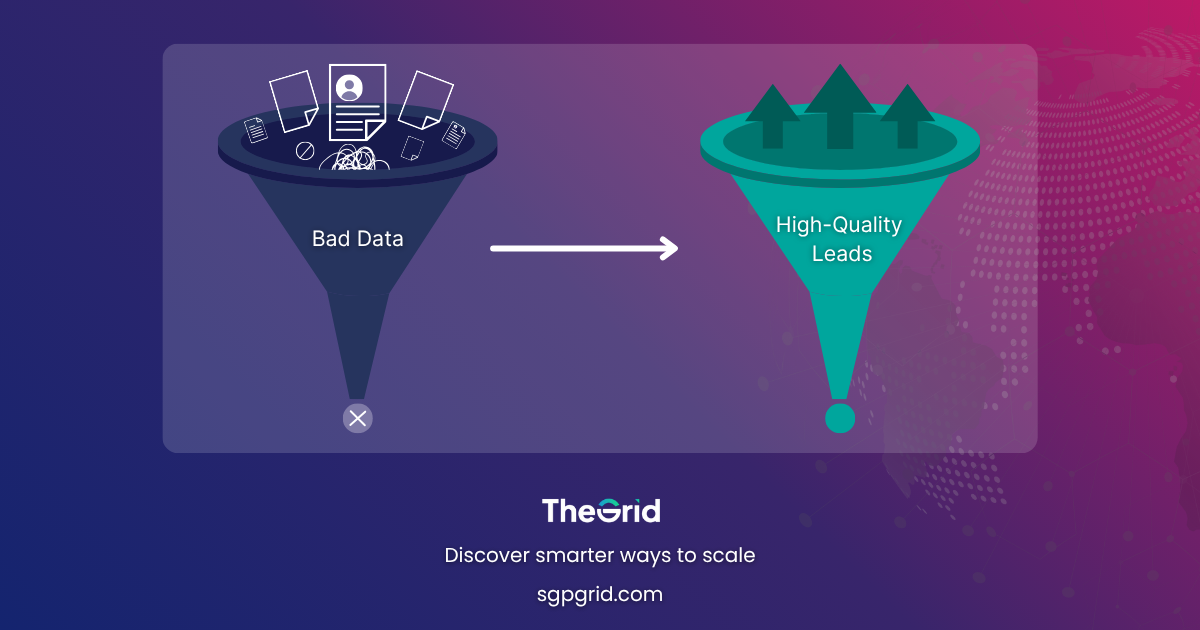
Data quality goes beyond having emails and phone numbers. High-quality sales data is:
- Accurate — every detail matches real-world information
- Complete — all variables needed to assess a lead are present
- Verified — independently checked against trusted sources
- Current — updated frequently
- Compliant — follows PDPA, GDPR, and regional standards
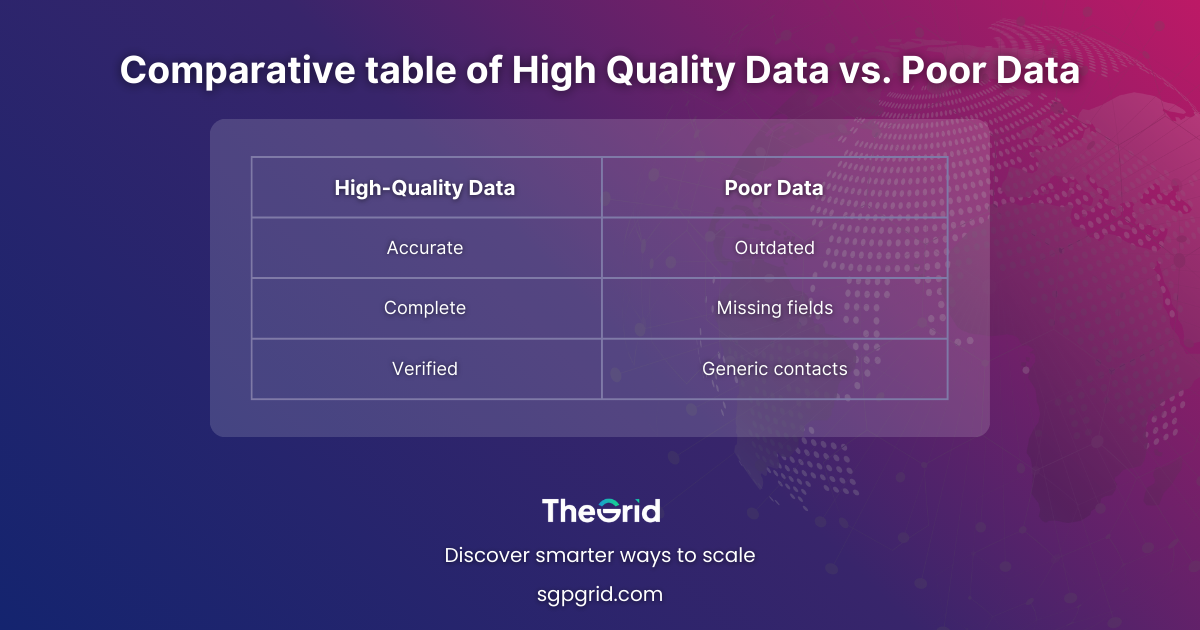
For SMEs doing lead generation in Singapore and SEA, this includes:
- correct company names
- updated industry classifications
- active email addresses
- real decision-maker roles
- financial or operational signals
- regional expansion indicators
When this data is wrong, everything downstream breaks: forecasting, outreach sequences, and the trust between marketing and sales.
Why Poor Data Creates Dead Leads
Dead leads aren’t unresponsive leads—they're leads that were never real opportunities.
Bad data guarantees the following issues:
1. Outdated Contact Details
Outreach never reaches the real decision-maker.
2. Wrong Company Profiles
You end up targeting businesses outside your ICP, lowering conversion rates.
3. Duplicate or Conflicting Records
Pipelines become messy and impossible to forecast.
4. Compliance Risks
Mishandling personal data—especially under Singapore’s PDPA—can lead to penalties and reputational damage.
Poor data creates friction inside teams.
Marketing believes sales ignore leads.
Sales believe marketing is handing over bad prospects.
The real issue: inaccurate data.
The Cost of Bad Data for SMEs
For large enterprises, bad data slows productivity.
For SMEs, it affects survival.
- Every bounced email affects the sender's reputation.
- Every wrong phone number waste limited selling hour.
- Every poor lead inflates the pipeline and misguides leadership decisions.
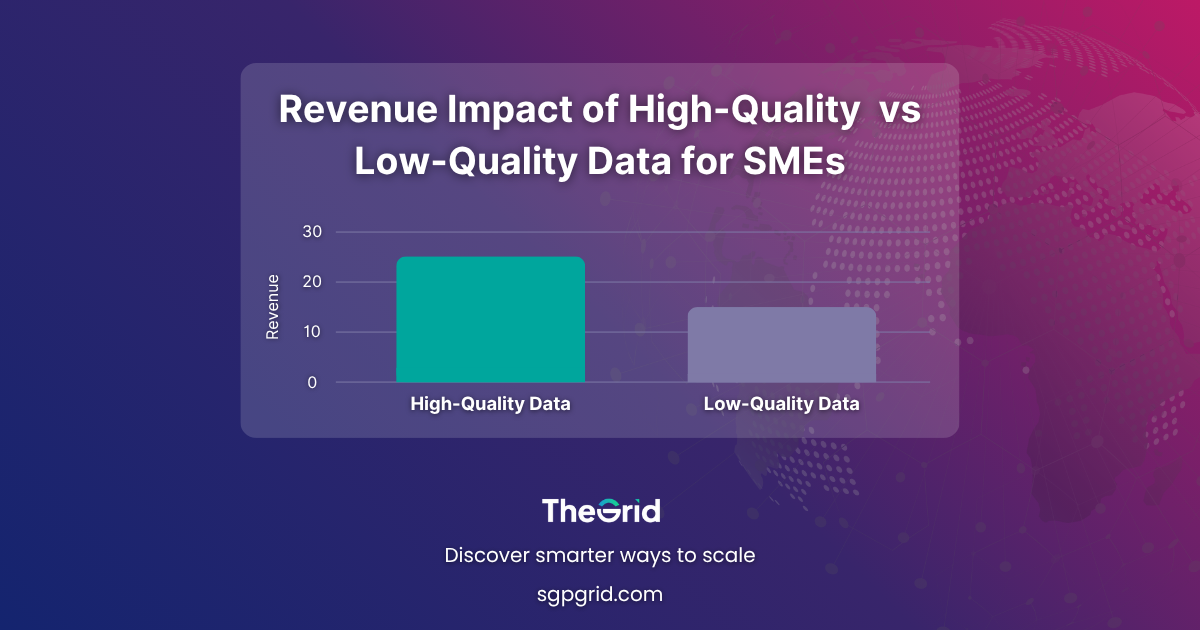
According to Gartner, poor data quality can cost companies up to 20% of revenue—a make-or-break figure for SMEs in emerging SEA markets.
This is why quality data is not a “nice to have”—it is the foundation of quality leads for SMEs.
How SMEs Can Improve Data Quality
Below are practical steps tailored for SME sales teams in Singapore and Southeast Asia.
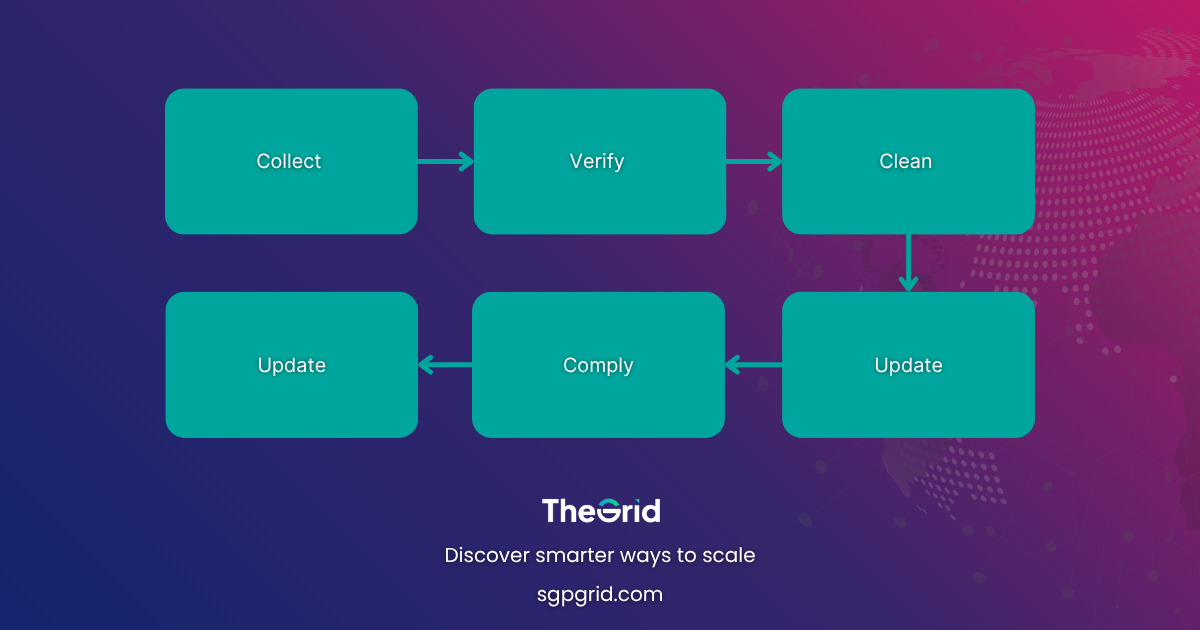
1. Perform Regular Data Hygiene and Enrichment
Databases shouldn’t remain static.
Clean, update, and enrich records weekly or monthly.
Eliminate duplicates. Normally, company names. Add missing firmographic data.
This ensures your sales pipeline reflects reality, not assumptions.
2. Use Trusted Sales Intelligence Platforms
Manual data collection is inefficient—and risky.
Platforms like The Grid provide:
- verified business data Singapore
- decision-maker data SEA
- firmographic and technographic insights
- accurate contact enrichment
- compliance-ready records
This dramatically reduces the risk of chasing invalid contacts.
3. Strengthen Sales–Marketing Alignment
Data quality is a shared responsibility.
Marketing should validate leads before handover.
Sales should regularly report data issues and conversion patterns.
This loop ensures that the ICP continuously improves.
4. Maintain Compliance Standards (PDPA, GDPR)
High-quality data must also be legally compliant.
Incorrect data handling exposes SMEs to penalties, especially under Singapore’s PDPA.
Compliance builds customer trust and protects brand integrity.
5. Centralize SEA B2B Data Management
Using one unified system—or a platform like The Grid—ensures:
- consistent data across teams
- easier monitoring of data quality
- a single source of truth for B2B insights
This makes your SEA sales intelligence more actionable.
Real-World Example
A logistics startup in Singapore relied on outdated spreadsheets for years. Many leads had wrong phone numbers, and several companies no longer existed. After shifting to a structured intelligence platform offering verified business data Singapore, the team doubled its conversion rate within six months. Better data meant fewer dead ends—and more time spent engaging real decision-makers.
Another SME selling workflow automation tools improved its outreach accuracy by adopting decision-maker data SEA. This helped the team identify the right department heads instead of generic emails. Outreach improved, meeting rates increased, and opportunities were created with far less effort.
Conclusion
Data quality is the backbone of effective lead generation. Without accurate, verified information, SMEs waste time, energy, and resources pursuing leads that cannot convert. By investing in clean, reliable, and compliant data, businesses in Singapore and Southeast Asia can dramatically improve sales pipeline accuracy, avoid dead leads, and maximize every sales effort.
With access to accurate SEA B2B data management and high-integrity insights from trusted platforms like The Grid, SMEs can build sustainable growth strategies and unlock more predictable revenue outcomes.
Disclaimer
This article is for informational purposes only. Data and examples are based on publicly available information and insights from The Grid’s platform. Results may vary depending on the business context.
References
- Personal Data Protection Commission Singapore (PDPC): https://www.pdpc.gov.sg
- Gartner Research: https://www.gartner.com/en/data-analytics
- HubSpot: https://blog.hubspot.com/marketing/data-quality