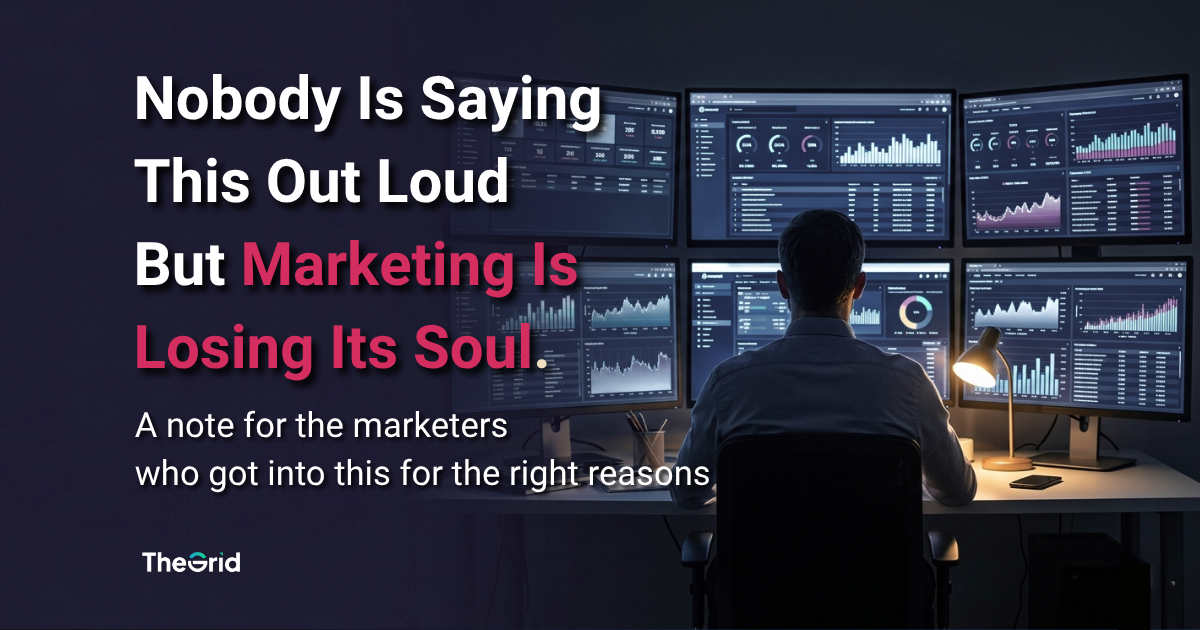
A note for the marketers who got into this for the right reasons
I have been in B2B in Southeast Asia, and this is the most honest thing I have written in a while.
I came across a post recently that stopped me mid-scroll. A marketer venting about how every function in our industry is being rebranded into an engineering version of itself. Growth engineer. Content engineer. GTM engineer. Marketing engineer. And how, somewhere between accountability and optimization, we lost the thing that actually made marketing work in the first place.
Knowing the customer. Having an opinion. Taking the risk, nobody else is willing to take it.
And I felt that deeply.
Here’s the part worth saying plainly: this didn’t happen because “engineers took over marketing.” It happened because AI raised expectations and exposed how shaky our foundations were.
What actually changed
In the last two years, AI has reshaped the baseline of what a marketer is expected to do. Suddenly, everyone was expected to prompt, automate, build workflows, run models, interpret outputs, and operate tools that did not exist eighteen months ago. And because AI made certain tasks faster and cheaper, the industry quietly raised the floor on everything else.
The job descriptions changed almost overnight. It is not just a marketer with an engineering mindset anymore. It is building the pipeline, owning the attribution, running the models, and operating the stack. What was a creative and strategic role two years ago is now half a technical role, and everyone is just expected to skill up and keep moving.
And it is not only marketers feeling this.
Salespeople are caught in the same current. The expectation now is that a good sales professional should also be running AI-powered prospecting tools, interpreting intent signals, building sequences, and managing a tech stack that keeps growing. The relationship builder who could walk into a room and read people is now also supposed to be a data analyst and a systems operator. The pressure is real on both sides of the revenue function.
And here is what that pressure produced. More systems. More dashboards. More automation layers built on top of each other. Because when AI raises the ceiling on output expectations, the instinct is to build more infrastructure to keep up.
But here is what nobody is talking about.
Most of those systems were built on broken foundations.
To be fair, the engineering mindset isn’t the problem. Logic, data, and rigor belong in marketing. Losing the customer in the process is.
Marketing became a machine because the foundation we were building was always shaky. Unreliable inputs. Outdated information. Contacts that no longer exist or never belonged on that list to begin with.
This is not just a theoretical problem. TheGrid’s own inbox is proof.
A sales and marketing manager reached out to TheGrid’s company pages across WhatsApp, email, and social media, with multiple follow-up attempts, offering chemical manufacturing products. TheGrid is a B2B sales intelligence platform serving the IT and sales industry, and they have never needed Zodium Gluconate or Polycarboxylate things.
This isn’t a bad salesperson. This is what happens when the data is broken at the source. Someone worked hard to send that message. The list just had no business, including them.
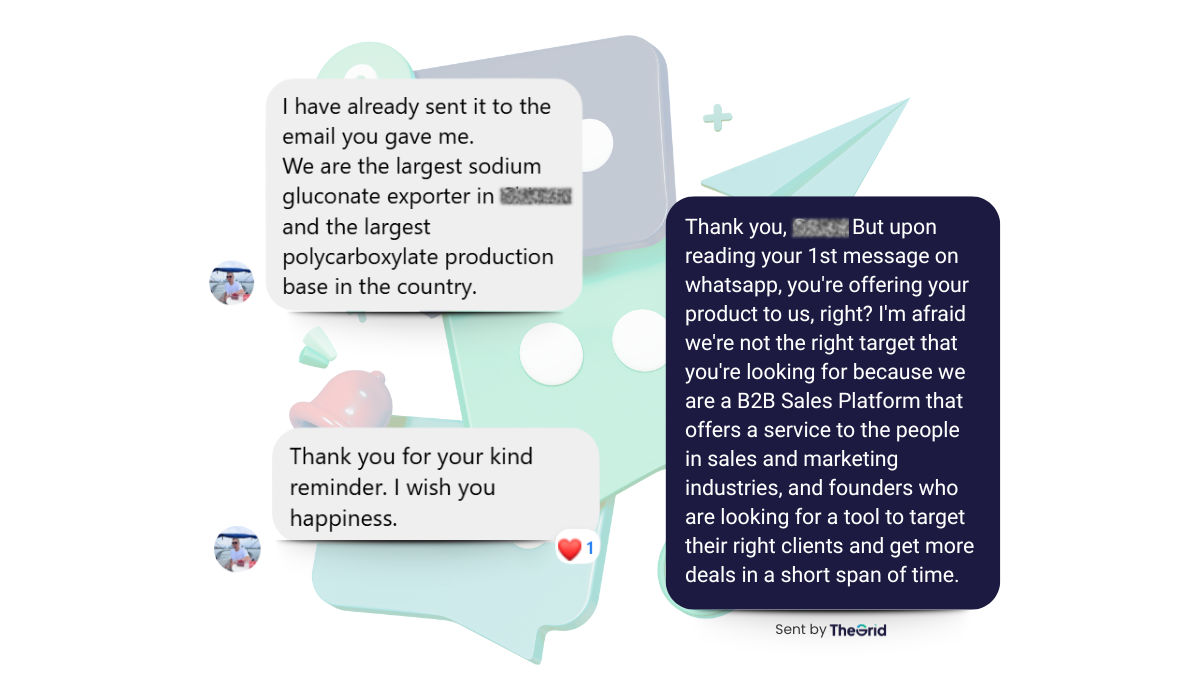
When the list is wrong at the source, no amount of automation, sequencing, or follow-up cadence fixes it. You just reach more of the wrong people, faster.
So naturally, teams built more layers on top to make sense of it all. And slowly those layers became the job itself. And every time I scroll on LinkedIn, I notice many people and teams now work out the tools instead of using the tools to create outcomes. And sometimes, this complexity is just unreliable data wrapped in expensive software.
The dashboards multiplied. The attribution models got heavier. The creative brief had to survive three approval gates before it ever reached a human being.
And the people who got into this because they loved writing or building things or sitting across from a customer or chasing a strange idea past midnight quietly started wondering if there was still a seat at the table for them.
Maybe the industry needed more rigor. But somewhere along the way, we confused complexity with progress.
What helped me get it back (practically)
My turning point came when I stopped spending energy fighting unreliable, scattered information and instead fixed the starting point. I am based in Southeast Asia, and the data landscape here is far more fragmented than what most global platforms are designed to handle.
Years ago, I spent entire days just trying to confirm if a company was still active, who actually made decisions, and whether the number on Facebook even worked. Before you can sell, you first have to verify reality. That is the hidden tax of traditional prospecting here. You burn hours just validating basic information.
That frustration, plus years of manually wrestling messy data across the Philippines, is what pushed me to build something about it. Using AI and hyper-localized data from TheGrid, a leading B2B sales intelligence platform built exclusively for SEA, I put together what I now call a Lead Momentum Scorecard Toolkit.
The core idea is simple: your pipeline is not unpredictable; you are just looking at the wrong signals. Instead of scoring accounts purely by fit or by activity volume, the scorecard layers in data freshness, decision-maker visibility, and trigger timing. Three dimensions that most pipelines completely ignore, and the three dimensions that most reliably separate accounts that are actually ready to move from ones that just look ready on a dashboard.
I wrote about this in full including the downloadable toolkit, in an earlier piece here on TheGrid. If you want the framework before reading further, you can find it here.
But the short version is this: fixing the data foundation is what made the scorecard possible. You cannot score momentum you cannot see.
When I started using TheGrid, which is built exclusively for this region and includes verified contacts, org charts, and genuine buying signals, something unexpected came back to me.
The breathing room.
Space to focus on the customer.
Space for ideas that actually matter.
Space to do the work I originally signed up for.
The marketers and salespeople who will navigate this shift are not the ones chasing and collecting new certifications the fastest. They are the ones who find tools that carry technical weight so they can stay focused on what humans do best.
Let the creative process stay unpredictable. Your underlying data does not have to be.

If you are one of the quiet ones feeling this but not saying it.
You are not falling behind. You are not becoming obsolete. You just need a stronger starting point, not a new job title.
AI is not going away. The pressure is not going away. But the marketers and salespeople who will still be standing in five years are the ones who used the right tools to stay human in a landscape that keeps trying to turn them into machines.
That is worth protecting.
What are you doing to protect the human side of your work?
Justine Credo is a B2B marketer and practitioner based in the Philippines. This article reflects her personal experience and perspective.